
Learning how to wash crochet blanket fibers properly is the difference between a throw that lasts twenty winters and one that shrinks, felts or stretches after a single wash. This guide starts with the yarn label, then gives you the right method for each fiber, step by step machine and hand washing, and how to dry the blanket so it keeps its shape.
The single most useful habit: when you finish any blanket, keep one ball band. Tape it inside your pattern notes or tuck it into a gift card. Without it, you are guessing.
At a glance
Skill level
AnyoneFirst rule
Follow the yarn labelWater
Cool for most fibersDrying
Flat, or low tumble for acrylicTime
1 to 2 days to air dryYou need
Mild detergent, mesh bag, towels
Start with the yarn label
The ball band tells you exactly what the fiber can handle. Most labels use small care symbols. Here is what they mean in plain words:
| Symbol | Meaning |
|---|---|
| Washtub | Machine washable |
| Washtub with dots or a number | Water temperature: 1 dot cold, 2 warm, 3 hot |
| Washtub with a line under it | Gentle or permanent press cycle |
| Washtub with a hand | Hand wash only |
| Square with a circle | Tumble dry; dots show the heat |
| Square with a flat line inside | Dry flat |
| Any symbol crossed out | Do not do this |
If you made the blanket from mixed yarns, wash it the way the most delicate yarn needs.
How to wash crochet blanket yarn, fiber by fiber
When there is no label, use what you know about the fiber. Always choose the gentler option if you are unsure.
| Fiber | Washing | Drying |
|---|---|---|
| Acrylic | Machine, gentle, cool or warm | Tumble low or flat. High heat makes it limp for good |
| Cotton | Machine, gentle, cool to warm | Flat, or tumble low. Heavy when wet, can shrink a little |
| Superwash wool | Machine, wool or gentle cycle, cool | Flat is safest; some labels allow low tumble |
| Regular wool, alpaca | Hand wash in cool water, no rubbing | Flat only. Heat and agitation felt it |
| Chenille or velvet (polyester) | Machine, delicate, cold, in a mesh bag | Flat or very low tumble |
| Bamboo or viscose blends | Hand or delicate, cold | Flat. Stretches badly when wet |
Big chenille throws, like the ones on the hand crochet blanket page, are very heavy when wet. Check that your machine drum can hold one before you start.
In pictures
What the work should look like, with the yarn and hook used for each sample.
 LevelEasyYarnWorsted acrylicHookNot needed
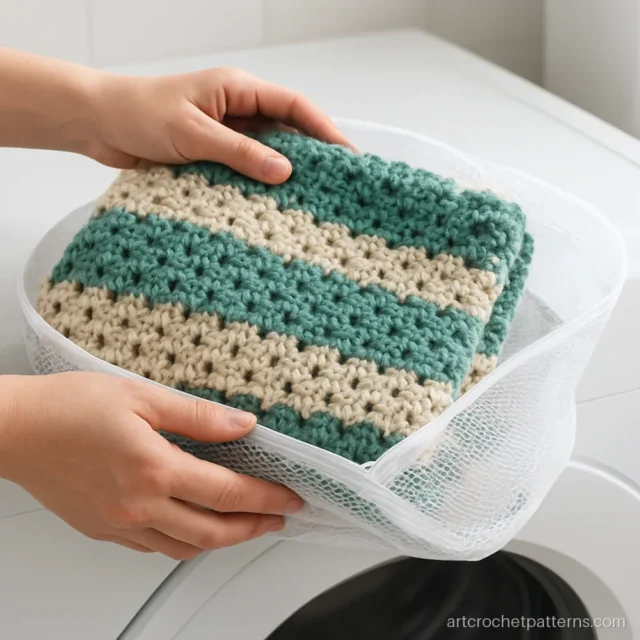
Folding a blanket into a mesh bag
A zipped mesh bag keeps the blanket from stretching around the drum and stops loops from catching on other laundry.
Maker note: Fold the blanket in quarters first. A loose blanket bunches to one side and unbalances the spin.
 LevelEasyYarnWorsted woolHookNot needed
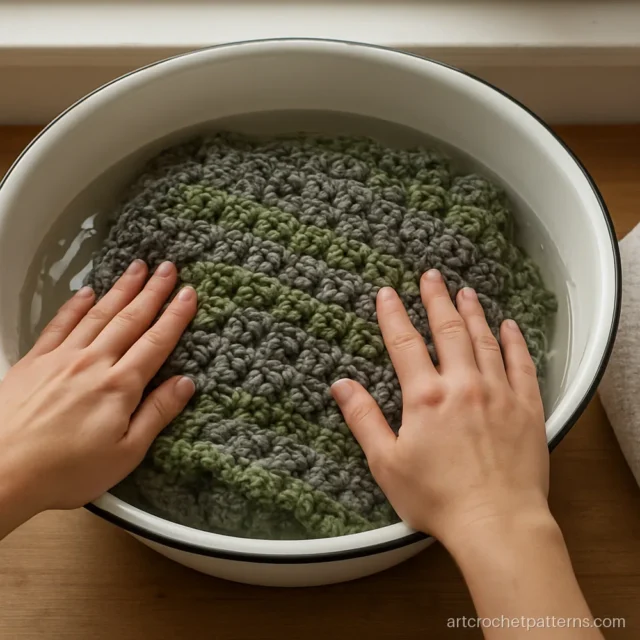
Soaking a wool blanket by hand
Wool that is not superwash must be soaked, never rubbed. Press it under, wait, then lift the whole blanket out supported from below.
Maker note: Fill the basin before adding the blanket. Running water straight onto wool can start felting.
 LevelEasyYarnWorsted cotton blendHookNot needed
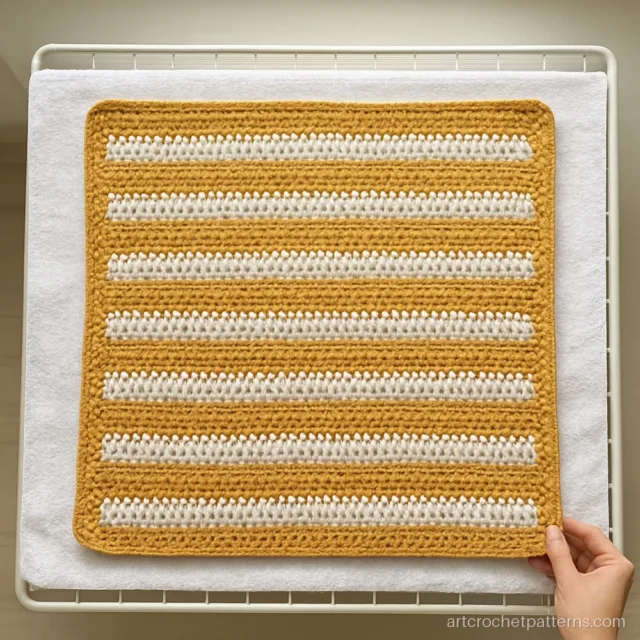
Drying flat on towels
Lay the blanket flat and pat it back into a square. Hanging a wet blanket drags it longer, and the stretch rarely comes back.
Maker note: Flip the blanket after 12 hours so the underside dries too. Thick blankets can take two days.
Machine washing, step by step
- Check for damage. Mend any broken stitch or loose end first; the machine will make a small hole bigger.
- Fold and bag it. Fold in quarters and zip it into a large mesh bag. For a big throw, use a pillowcase tied shut.
- Pick the cycle. Delicate or wool, cool water, low spin. Wash the blanket alone or with a few soft towels to balance the load.
- Use a mild detergent. A small amount of gentle liquid soap. Skip bleach and skip fabric softener on wool.
- Remove it right away. Lift the wet blanket out supported in both arms, not by one corner.
A new blanket with deep reds or navy can bleed. Add a color catching sheet to the first two washes, and never soak a two color blanket for long.
Hand washing, step by step
- Fill a tub or large basin with cool water and a spoonful of wool wash or mild soap. Mix it in before the blanket goes in.
- Lay the blanket in and press it under gently. It should be fully wet.
- Leave it to soak for 15 to 20 minutes. Do not rub, twist or swish. Movement plus water is what felts wool.
- Drain the water while holding the blanket back. Refill with clean water of the same temperature and press again to rinse. A sudden change from warm to cold also shocks wool.
- Press out water against the side of the tub. Never wring.
- Roll the blanket in a dry towel like a jelly roll and press on it to soak up more water.
Drying so it keeps its shape
Most damage happens during drying, not washing. Water is heavy, and wet stitches stretch easily.
- Lay the blanket flat on dry towels, a mattress protected with a sheet, or a flat mesh rack.
- Pat it back to size, straighten the edges and square the corners. This is the same idea as blocking crochet.
- Keep it out of direct hot sun, which can fade colors.
- Turn it over halfway through drying.
- Only acrylic and some cotton blends should go in the dryer, on low, and take them out while slightly damp to finish flat.
Spot cleaning between washes
A full wash is a lot for a big blanket. For a small spill, blot right away with a clean cloth. Dab the spot with a cloth dipped in cool, lightly soapy water, working from the outside of the stain inward. Rinse with a damp cloth and press dry with a towel. For pet hair, a rubber glove dragged over the surface lifts most of it. Air the blanket outdoors in shade to freshen it between washes.
Laundry day disasters, prevented
| Result | What caused it | Next time |
|---|---|---|
| Blanket shrank and feels thick | Wool felted with heat or rubbing | Cool water, hand wash, no agitation |
| Blanket grew longer | Hung up wet, or bamboo blend | Always dry flat |
| Acrylic went limp and shiny | High dryer heat | Low heat or air dry |
| Fuzzy pills on the surface | Friction with other laundry | Wash alone in a mesh bag; remove pills with a fabric shaver |
| Colors ran | Dark dye not set | Cold water and a color catching sheet |
Storing a clean blanket
Make sure the blanket is completely dry before you put it away, or it can smell musty. Fold it loosely and store it in a cotton bag or pillowcase, not sealed plastic, so it can breathe. Add cedar blocks for wool. Heavy blankets keep their shape better folded on a shelf than hung over a rod. You can find more care and project ideas in the crochet blanket section, and help with picking an easy care yarn on crochet yarn.
Questions makers ask
Can I put a crochet blanket in the washing machine?
Yes, if the yarn label shows a washtub symbol. Use a mesh bag, a gentle cycle and cool water. Wool that is not superwash should be hand washed.
How do you dry a crochet blanket?
Lay it flat on towels or a drying rack and shape it while damp. Acrylic can go in the dryer on low. Never hang a wet blanket on a line.
How often should I wash a crochet blanket?
A blanket used every day on a sofa needs a wash every few months. Spot clean spills in between. Baby blankets get washed much more often, so make them in machine washable yarn.
Will my crochet blanket shrink in the wash?
Acrylic barely shrinks. Cotton can shrink a little in hot water. Regular wool can shrink badly if it felts. Cool water and no rubbing prevent most shrinking.
What detergent is best for crochet blankets?
A mild liquid detergent without bleach. For wool, use a wool wash. Use only a small amount so it rinses out fully.
How do I wash a blanket if I lost the yarn label?
Treat it as the most delicate fiber it could be: soak it by hand in cool water, then let it dry flat. If you kept a leftover scrap, wash that first as a test.