
Amigurumi patterns turn a ball of yarn into small stuffed animals, plants and foods, and this hub explains what amigurumi is, the core method every toy shares and where to find each guide on the site. The word is Japanese. It joins ami, meaning crocheted or knitted, with nuigurumi, a stuffed toy. So the amigurumi meaning is simply a crocheted or knitted stuffed toy.
Almost every crochet amigurumi uses the same handful of moves: a magic ring, tight single crochet in a spiral, even increases and decreases, stuffing and a few sewn pieces. Learn them once with the little bird below and you can make anything on this page.
At a glance
Skill level
Beginner to advancedMain stitch
Single crochet (UK double crochet) in a spiralYarn
Worsted or DK acrylic or cottonHook
1 or 2 sizes below the label, often 3.5 mmExtras
Fiberfill, stitch marker, safety eyes or embroidery flossTime
2 hours for a mini, 8 or more for a large toy
6 amigurumi designs to make
Every design lists the skill level, yarn and hook, with a note from the maker.
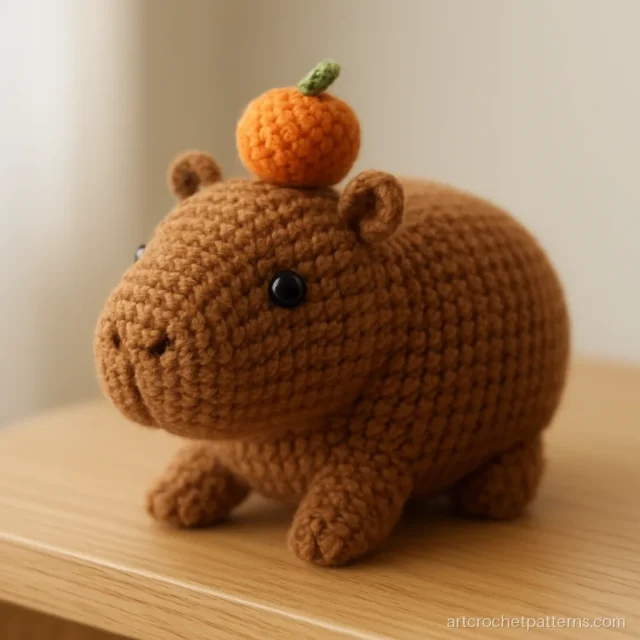 LevelEasyYarnWorsted acrylicHook3.5 mm (E-4)
Calm sitting capybara
A barrel shaped body with a blunt square nose and tiny round ears. Almost the whole toy is sc rounds with very few pieces to sew.
Maker note: Shape the flat snout by stuffing firmly and pinching the front rounds before you close the head.
 LevelEasyYarnWorsted cottonHook3.5 mm (E-4)
Succulent trio in pots
A rosette, a round cactus ball and a trailing string of pearls, each in its own crochet pot. Plants that never need water.
Maker note: Put a flat stone in the bottom of each pot before stuffing so the plants do not tip.
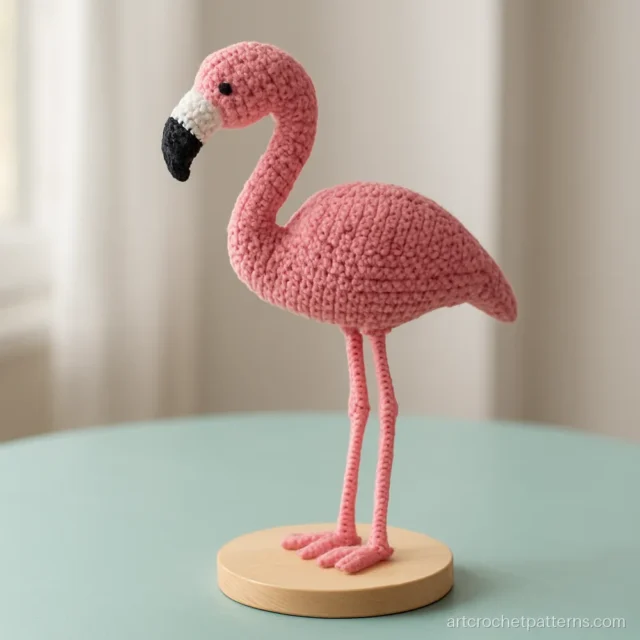 LevelIntermediateYarnDK cottonHook2.75 mm (C-2)
Standing pink flamingo
A pear shaped body, a long curved neck and thin legs made over wire. A grown up shelf piece rather than a play toy.
Maker note: Wire is only for display pieces. For play toys, crochet the legs short and stuff them firmly.
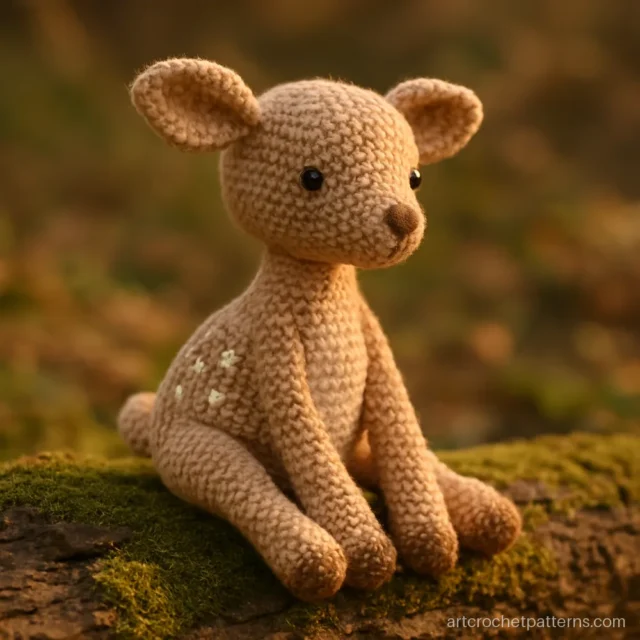 LevelIntermediateYarnWorsted acrylicHook3.5 mm (E-4)
Spotted fawn
A tan fawn with embroidered cream spots and floppy ears. The legs are long tubes stuffed only at the hooves so it sits easily.
Maker note: Embroider the spots before sewing on the head; it is much easier to reach inside.
 LevelBeginnerYarnWorsted cottonHook4 mm (G-6)
Play breakfast set
Flat pieces like the egg and toast are just shaped circles and rectangles worked in rows. Great practice before your first animal.
Maker note: Cotton keeps play food crisp and washable. Stuff toast and pancakes only lightly so they stay flat.
 LevelBeginnerYarnWorsted acrylicHook3.5 mm (E-4)
Striped pocket worm
A short stuffed tube in stripes with a round head. It fits in a pocket and gives busy hands something to squeeze.
Maker note: Change color every two rounds and carry the yarn inside the tube; it stays hidden once stuffed.
What is amigurumi?
Amigurumi is the craft of making small stuffed figures with yarn, most often crocheted. It grew popular in Japan and spread through the rest of the world as makers shared round by round charts. The style leans toward big heads, small bodies and simple faces, which is why so many look cute even when the shapes are plain.
Crochet suits it better than knitting. Tight single crochet makes a dense fabric that holds stuffing in and keeps its shape. Knitted toys exist too, but most amigurumi crochet patterns you will see work in rounds of sc from start to finish.
The core method behind all amigurumi patterns
- Magic ring. Wrap the yarn in a loop, work 6 sc into it and pull the tail. The hole closes completely, unlike a chain ring. The magic ring guide walks through it slowly.
- Spiral rounds. Do not join with a slip stitch. Keep working into the first stitch of the last round and move a stitch marker up each time. The fabric stays seamless.
- Increase evenly. A flat amigurumi circle grows by six per round: 6, 12, 18, 24, 30. Spread the increases and the piece grows into a dome.
- Straight rounds of plain sc build the sides of a ball or tube.
- Invisible decrease. Insert the hook into the front loop of the next two stitches, yarn over, pull through both front loops, then finish as a normal sc. It hides far better than a regular sc2tog. See the invisible decrease lesson.
- Stuff as you go. Fill firmly when the opening is still wide enough for your fingers, about 12 to 18 stitches.
- Close and sew. Run the needle under the front loop of each of the final 6 stitches, then cinch the tail. Pin limbs on before you sew so you can check the pose.
Safety eyes or embroidered eyes
Safety eyes are plastic eyes with a post and a washer that locks on the inside. They look neat and sit evenly. Push the post through between two rounds while the head is still open, and press the washer on until it clicks. Even so, they are a small part that can come loose under chewing.
Toys for anyone younger than 3 get stitched eyes worked in black yarn or floss, never buttons, beads or plastic eyes. Embroidered eyes also suit toys that will be washed often. The guide to safety eyes covers sizes and fitting, and crochet eyes shows stitched and crocheted options.
| Choice | Best for | Watch out for |
|---|---|---|
| Safety eyes | Gifts for older kids and adults, shelf toys | Must be fitted before closing; never on baby toys |
| Embroidered eyes | Baby toys, washable toys | Practice the shape on scrap first |
| Crochet circles | Large toys, cartoon style | Tack down the whole rim, not just two points |
Yarn and hook for crochet amigurumi
Toy makers size down from whatever hook the yarn wrapper recommends, often by two steps. The goal is fabric tight enough that stuffing does not show between stitches.
| Yarn weight | Typical hook | Toy size from a basic pattern |
|---|---|---|
| Fingering cotton | 2 to 2.5 mm | Tiny, 2 to 3 inches |
| DK cotton or acrylic | Between 2.75 and 3.25 millimeters | Small, 4 to 6 inches |
| Worsted acrylic or cotton | Usually E-4 to F-5 | Medium, 6 to 9 inches |
| Chunky chenille | 5 to 6 mm | Large and plush, 10 inches up |
Acrylic stays soft through many washes. Cotton shows every stitch clearly and keeps crisp shapes for food and plants. Chenille is cuddly but hides the stitches, so trust your marker and tally each round.
Starter pattern: round little bird
One ball, two wings and a beak. This crochet bird teaches every step from the method above in about an hour.
Materials: worsted acrylic in blue (about 25 yards) and a little yellow, 3.5 mm (E-4) hook, two 8 mm safety eyes or black floss, fiberfill, stitch marker, tapestry needle. Size: about 3 inches tall. Work in a spiral without joining.
Body (blue)
- Rnd 1: 6 sc in MR (6).
- Rnd 2: inc in each st (12).
- Rnd 3: (sc, inc) x6 (18).
- Rnd 4: (2 sc, inc) x6 (24).
- Rnds 5 to 9: sc in each st (24).
- Place eyes between Rnds 6 and 7, about 4 sts apart.
- Rnd 10: (2 sc, dec) x6 (18).
- Rnd 11: (sc, dec) x6 (12). Stuff firmly.
- Rnd 12: dec x6 (6). Fasten off and close the hole.
Wings (blue, make 2)
- Rnd 1: 6 sc in MR (6).
- Rnd 2: (sc, inc) x3 (9).
- Rnds 3 and 4: sc in each st (9). Do not stuff. Flatten and sew the open edge to the sides of the body.
Beak (yellow)
- Rnd 1: 4 sc in MR (4).
- Rnd 2: (sc, inc) x2 (6). Sew between and just below the eyes.
Want a flamingo or a parrot next? Keep the same body and change the beak, add a longer neck tube, or wrap thin legs. That habit of reusing a base is how many makers design their own toys.
Detailed guides in the Amigurumi section
| Guide | What you will find |
|---|---|
| Crochet animals | A one body pattern that becomes a bear, cat, pig or mouse |
| Crochet cow | A sitting cow with a pink muzzle, horns and spots |
| Highland cow | Shaggy fringe hair and long horns |
| Crochet cat | A one piece sitting cat plus cat themed gifts |
| Crochet bunny | Long eared rabbits for spring baskets |
| Crochet octopus | A round head with eight curly legs |
| Crochet dinosaur | A chubby upright dino with back spikes, plus horned and long necked ideas |
| Crochet dragon | Wings, horns and a curled tail |
| Crochet bear | Classic jointed and sitting bears |
| Crochet frog | Wide mouths and bean bag bodies |
| Crochet duck | Ducklings and bath shelf ducks |
| Crochet penguin | Two color bodies with color changes |
| Crochet mushroom | Spotted caps, a good first non animal shape |
| Crochet cactus | Ridged plants in pots, cousins of the succulent trio |
| Crochet axolotl | Frilly gills and a smiling face |
| Crochet snake | Long tubes and stripe changes |
| Crochet lovey | A small blanket with a toy head, made for babies |
A short path for beginners
- Practice single crochet until your stitches look even.
- Make a ball: rounds up to 24, six straight rounds, then decrease back to 6.
- Make the little bird above to learn eyes and sewing small parts.
- Try one of the easy animals, such as the mushroom or the octopus, which have few pieces.
- Move on to animals with legs and ears, like the cow or the bunny.
- Then try shaping: dragon wings, a capybara snout, a deer with long legs.
Amigurumi troubles and quick repairs
| You see | Most likely | Do this |
|---|---|---|
| Stuffing peeks through | Hook too big or tension loose | Drop a hook size; try the yarn under technique |
| Head looks hexagonal | Increases stacked in the same place | Stagger the increases, for example (sc, inc, sc) in place of (2 sc, inc) |
| Lumpy surface | Fiberfill pushed in as big wads | Pull it apart into cotton ball sized puffs first |
| Stitch count off | Marker slipped or a stitch was missed | Move the marker every round and count at the end |
| Limbs flop | Only the top edge was stitched down | Stitch every loop of the opening to the body |
Ideas beyond animals
Many free amigurumi patterns are not animals at all. Crochet food is a favorite for play kitchens: eggs, fruit, cookies and sushi rolls are flat circles and short tubes. A crochet succulent or cactus brings green to a desk with no watering. A crochet fidget toy, like a striped worm or a squishy ball, gives restless hands something soft. Holiday makers use the same skills for ornaments, and the Christmas patterns include several tiny toys. For crochet basics before you start any of these, the how to crochet lessons begin with the first slip knot.
Questions makers ask
What does amigurumi mean?
It is a Japanese word that joins ami, crocheted or knitted, with nuigurumi, stuffed toy. In English it now means any small stuffed figure made with yarn, most often crocheted in tight rounds.
Is amigurumi hard for beginners?
The stitches are easy: nearly every toy is sc plus its inc and dec. The tricky parts are tight tension and sewing pieces on evenly. Start with a ball or the little bird and you will learn both.
What hook size is best for amigurumi?
Worsted toys are mostly made on a hook near 3.5 millimeters. Thinner DK yarn wants something closer to 3 millimeters. If stuffing shows through, go down another size.
Why do amigurumi patterns work in a spiral?
Joining each round leaves a visible seam and a slight jog. A spiral has neither, so the toy looks smooth all the way around. You only need a stitch marker to know where each round starts.
Are safety eyes safe for babies?
Not for little ones. Under age 3, stitch eyes and nose in yarn instead. Safety eyes can be chewed loose, and buttons and beads are a choking risk.
Can amigurumi go in the washing machine?
Check the ball band first. Nearly all acrylic and cotton toys survive a gentle machine cycle inside a mesh bag. Air dry and reshape. Toys with wire or wool felt should be spot cleaned only.
What stuffing is best for amigurumi?
Polyester fiberfill is the usual choice. It is light, washable and holds shape. Add small tufts at a time and stuff firmly so the toy does not sag after a few hugs.