
A crochet blanket is the project most makers dream about when they first pick up a hook, and this hub shows you how to plan one, how much yarn to buy, which stitch to choose and where to find each of our blanket patterns. You do not need fancy skills. A blanket is a long rectangle of rows, or a pile of small squares sewn together, and both use stitches you can learn in a week.
The hard part is size. A throw has about twenty times the area of a dishcloth, so a small change in your stitch or hook adds up to hours and hundreds of yards. That is why we start with planning, then move to stitches, then to finishing.
Short on time? Scroll to the detailed guides table and pick a pattern, or open the blanket size planner to work out your chain.
At a glance
Skill level
Beginner and upYarn
Worsted (4) acrylic or cotton blend for mostHook
5 mm to 6 mm for worstedEasiest stitches
sc, hdc, dc, moss stitchCommon sizes
Stroller 30 by 35, throw 50 by 60 inchesTime
15 to 60 hours, by size and stitch
6 blankets designs to make
Every design lists the skill level, yarn and hook, with a note from the maker.
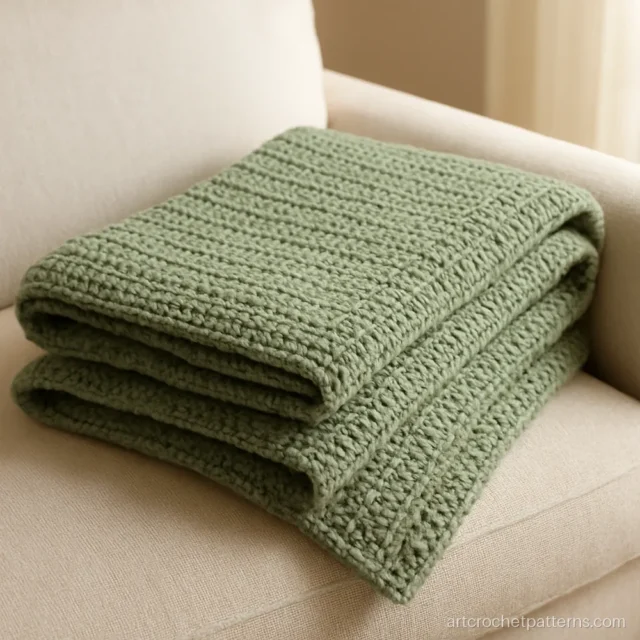 LevelBeginnerYarnWorsted acrylicHook5.5 mm (I-9)
Plain hdc throw in sage
The easiest crochet blanket of all: one color, one stitch, worked back and forth. Half double rows give a soft, even fabric with no holes.
Maker note: For the opening ten rows, tally your stitches on each pass. Edges that wander start early.
 LevelEasyYarnWorsted acrylicHook5.5 mm (I-9)
Granny stripe in rainbow and cream
Clusters of three double crochet in two row stripes. A great scrap buster, and the open clusters use less yarn than solid stitches.
Maker note: Put a cream stripe between every color. It calms a busy palette and ties scraps together.
 LevelEasyYarnBulky (5) wool blendHook8 mm (L-11)
Chunky moss stitch bed throw
Bulky yarn and moss stitch make a woven looking throw that works up fast. Charcoal hides wear on a well used bed.
Maker note: Moss stitch pulls in less than single crochet, so chain about 5 percent fewer than you think.
 LevelIntermediateYarnWorsted cotton blendHook5 mm (H-8)
Corner to corner gingham
Three shades of blue in small tiles make a picnic check. Corner to corner builds the blanket on the diagonal, one tile at a time.
Maker note: Use bobbins for each color block in a row and twist strands at every change so no gaps form.
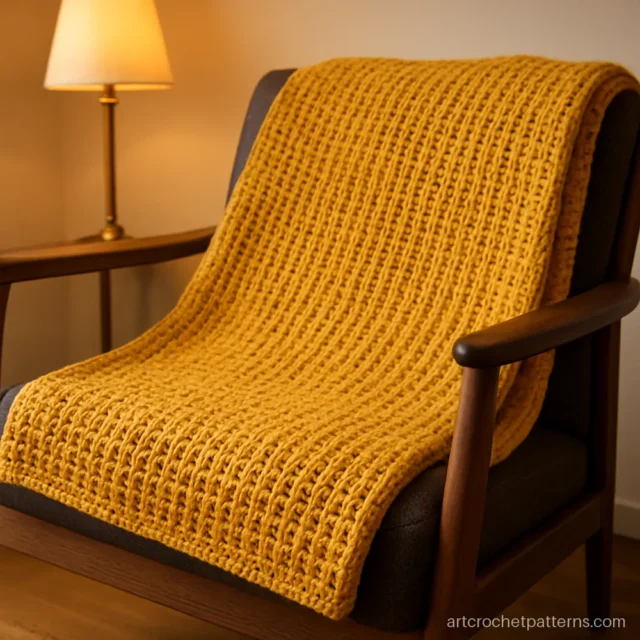 LevelIntermediateYarnWorsted woolHook6.5 mm cable hook
Tunisian simple stitch lapghan
Tunisian simple stitch makes a dense, almost woven fabric. A long cable hook holds all the loops for wide rows.
Maker note: Go up two hook sizes for Tunisian. It curls badly on a regular size hook.
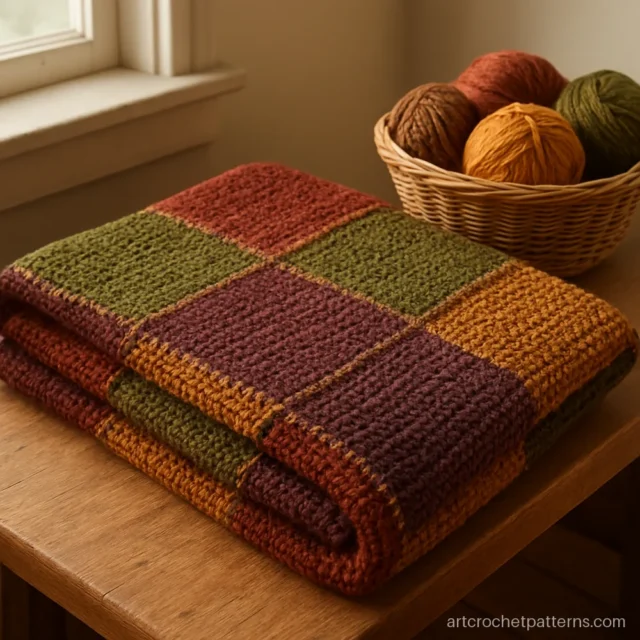 LevelEasyYarnWorsted wool blendHook5 mm (H-8)
Joined squares in autumn tones
Twenty four solid squares joined with a slip stitch seam. Squares are easy to carry and you can stop at any size.
Maker note: Pin and steam all the squares to one matching size first, since uneven squares make a wavy seam.
How to crochet a blanket, start to finish
- Pick a size. Choose from the table below. A stroller or lapghan size is the kindest first goal.
- Pick a stitch and yarn. Worsted weight acrylic in a light color is easy to see and easy to wash.
- Make a swatch. Crochet a square at least 5 inches wide in the real stitch, wash it, and count stitches and rows over 4 inches.
- Work out the chain. Stitches per inch times the width you want, plus the turning chain. The crochet blanket sizes planner does this math for you.
- Chain loosely. A long chain often ends up tight. Chain with the next larger hook, or begin with a foundation row instead.
- Work rows until long enough. Measure on a flat surface, never while the blanket hangs off your lap.
- Finish. Weave in ends, add a border, and wash or block so the stitches settle.
Here is a no pattern recipe for a simple crochet blanket in half double crochet: chain your width plus 2, work hdc into the 3rd chain from your hook and every chain after it, then on each new row ch 2 (the ch 2 is not counted), turn, and hdc into each stitch. That is all. Add a round of sc as a border and you are done.
Blanket sizes and how much yarn to buy
| Blanket | Size | Worsted yards | Skeins of 200 yards |
|---|---|---|---|
| Lovey | 10 to 14 square | 150 to 250 | 1 or 2 |
| Stroller | 30 by 35 | 800 to 1,000 | 4 or 5 |
| Receiving | 40 by 40 | 1,100 to 1,400 | 6 or 7 |
| Lapghan | 36 by 48 | 1,200 to 1,500 | 6 to 8 |
| Crib | 45 by 60 | 1,800 to 2,300 | 9 to 12 |
| Throw | 50 by 60 | 2,000 to 2,600 | 10 to 13 |
| Twin | 65 by 90 | 4,000 to 5,000 | 20 to 25 |
| Queen | 90 by 100 | 6,000 to 7,500 | 30 to 38 |
These are planning numbers, not promises. Single crochet, puff and bobble stitches can need a quarter more yarn; granny clusters and lace need less. Each color should come from one dye lot and keep one extra skein until the border is on.
Choosing the stitch for a crochet blanket pattern
| Stitch | Fabric | Speed | Best for |
|---|---|---|---|
| Single crochet | Dense, warm, a bit stiff | Slow | Rugs, sturdy throws, a first try |
| Half double crochet | Soft and solid | Medium | Everyday throws |
| Double crochet | Drapey, small gaps | Fast | Large blankets on a deadline |
| Moss stitch | Flat, woven look | Medium | Stripes and color changes |
| Granny clusters | Open, light | Fast | Scrap blankets and afghans |
| Tunisian simple | Thick, almost woven | Slow | Cozy lap blankets |
For a longer list with swatches, read crochet stitches for blankets. A Tunisian crochet blanket needs a long cable hook and its own method; the Tunisian crochet guide covers the forward and return passes.
Detailed guides for blankets and home
Every blanket pattern and planning page in this section, with a line on what each one gives you.
| Blanket page | Inside |
|---|---|
| Crochet baby blanket | Soft shell stitch baby patterns plus the safety rules for little ones |
| Baby boy crochet blanket | Color and texture ideas for a nursery in blues, greens and neutrals |
| Crochet afghan patterns | The classic granny stripe and other heirloom style afghans |
| Chunky crochet blanket | Bulky and super bulky yarn for a throw that is done in two or three days |
| Single crochet blanket | The calmest first blanket: one stitch, dense and warm |
| Double crochet blanket | Taller stitches that grow fast and drape softly |
| Granny square blanket | Small portable squares joined into a big, bright whole |
| Temperature blanket | One row per day, colored by that day's high, worked for a year |
| Crochet star blanket | A six point star worked in rounds from the center out |
| Crochet flower blanket | Flower motifs joined into a garden of a blanket |
| Crochet bouquet blanket | Clustered blooms for a romantic, textured throw |
| Hand crochet blanket | Finger crochet with jumbo yarn, no hook at all |
| Crochet blanket sizes | Our planner turns your gauge into a chain count and a yardage range |
| Washing a crochet blanket | Washing, drying and storing so the blanket keeps its shape |
| Crochet pillow | Matching cushion covers that use the same stitches as your throw |
| Crochet rug | Heavy cotton or cord rugs for floors and doorways |
Smaller home projects that teach blanket skills in an evening: dishcloths, coasters, baskets, doilies and bookmarks.
Easy crochet blanket patterns: a short path for beginners
- Get comfortable with chains, sc and hdc using how to crochet.
- Make one dishcloth to practice straight edges and counting.
- Make a stroller size single crochet blanket or a striped hdc blanket in two colors.
- Try a second blanket in a new stitch: moss stitch, or a double crochet blanket.
- When rows feel automatic, try squares or a star in rounds.
Quick and easy crochet blanket patterns share three traits: one stitch repeated, a yarn of worsted weight or heavier, and no color changes mid row. Anything with a chart, a cable or many motifs is a second or third blanket, not a first.
Yarn and hook for blanket crochet
| Weight | Usual hook | Blanket feel |
|---|---|---|
| DK (3) | from 4.5 up to 5.5 mm | Light drape, slow to grow, lovely for baby |
| Worsted (4) | from 5.5 up to 6.5 mm | The standard choice for throws |
| Bulky (5) | 6.5, 8 or 9 mm | Heavy and quick |
| Super bulky (6) | anything from 9 up to 15 mm | Very fast, very heavy, needs lots of yarn by weight |
Acrylic is soft, washable and forgiving for beginners. Cotton breathes but is heavy and can stretch long when washed. Wool is warm and blocks beautifully, but check the label for machine washing. Hand dyed and natural fibers raise the yarn bill; a big blanket in plain acrylic is the gentlest on your budget.
Blanket hours: a realistic time estimate
Speed varies widely, but most people work about 40 to 70 square inches of worsted double crochet in an hour once the rhythm comes. Rough totals:
- Lovey: 2 to 4 hours
- Stroller blanket: 12 to 20 hours
- Throw: 30 to 50 hours
- Twin: 60 to 100 hours
Bulky yarn and taller stitches cut that time a lot. Single crochet and textured stitches add to it. A chunky throw on our chunky crochet blanket page can be done in a long weekend.
Blanket mistakes and how to fix them
| Blanket symptom | Most likely reason | Remedy |
|---|---|---|
| Blanket gets narrower | Skipping the final stitch on the way across | Clip a marker into both edge stitches as you work each row |
| Blanket grows wider | An extra stitch slips in at the turning chain | Learn whether your turning chain counts, and stick to it |
| Bottom edge pulls in | Tight foundation chain | Redo the chain with a bigger hook |
| Wavy edges | Uneven tension or border too full | Wash and block, then work the border with fewer stitches |
| Colors look patchy | Mixed dye lots | Alternate two skeins every two rows to blend them |
Borders, ends and washing
Run every yarn tail along 3 inches or more of stitches and then turn it back the other way, so it stays put through many washes. Our weaving in ends lesson shows the method. Then add a border: a single sc round with three stitches tucked into every corner does the job, and the crochet blanket border page has fancier edges. Wash and dry following the yarn label, and see blanket washing guide for drying flat and storing.
Questions makers ask
What is the easiest crochet blanket for a beginner?
A single crochet or half double crochet blanket in one color of worsted acrylic. There is only one stitch to learn, and mistakes are easy to see and fix.
What chain count should a blanket start with?
Take the width you want in inches, multiply it by how many stitches fit in one inch, then add extra chains for the first row: 1 for sc, 2 for hdc, and 2 for dc when the three skipped chains stand in for a dc. Check your stitch pattern repeat as well, since some need a multiple of 2 or 3.
What yardage suits a crochet throw blanket?
For a 50 by 60 throw in worsted weight, plan on roughly 2,000 to 2,600 yards in hdc or dc. Single crochet and textured stitches need more.
Should I make one big piece or squares?
One piece has no seams and is calm to work, but it gets heavy on your lap. Squares are portable and easy to fix, but you have to join them. Both make a lovely blanket.
Can I crochet a blanket without a pattern?
Yes. Pick a stitch, make a swatch, chain to your width and work rows until the length is right. The size planner helps with the chain count.
What is the difference between a blanket and an afghan?
In crochet the words are nearly the same. Afghan usually means a crocheted or knitted throw, often in granny squares or stripes, while blanket covers every size and style.