
A single crochet blanket uses the shortest basic stitch, so the fabric comes out dense, warm and nearly hole free; below you will see six designs, a color block lapghan written in full, and a sizing chart. It is the stitch most people learn first, which makes it a calm, familiar project for long winter evenings.
The trade off is speed. A single crochet row is roughly half the height of a dc row, so a blanket takes many more rows. Plan a lap size first. The secret to making it soft instead of stiff is a hook one or two sizes bigger than you would pick for a dishcloth.
At a glance
Skill level
BeginnerYarn
Worsted (size 4) acrylic or wool blendHook
6 mm (J-10)Gauge
13 sc and 15 rows = 4 inSize
36 by 48 in lapghanTime
35 to 45 hoursUK term
Double crochet blanket
6 single crochet blanket designs to make
Every design lists the skill level, yarn and hook, with a note from the maker.
 LevelBeginnerYarnWorsted acrylicHook6 mm (J-10)
Color block lapghan
Three tall blocks of color with only two changes, so there are hardly any ends. This is the pattern written on this page.
Maker note: Lay a long ruler on the blanket every 20 rows. Single crochet hides a slow slant until it is obvious.
 LevelBeginnerYarnWorsted wool blendHook6 mm (J-10)
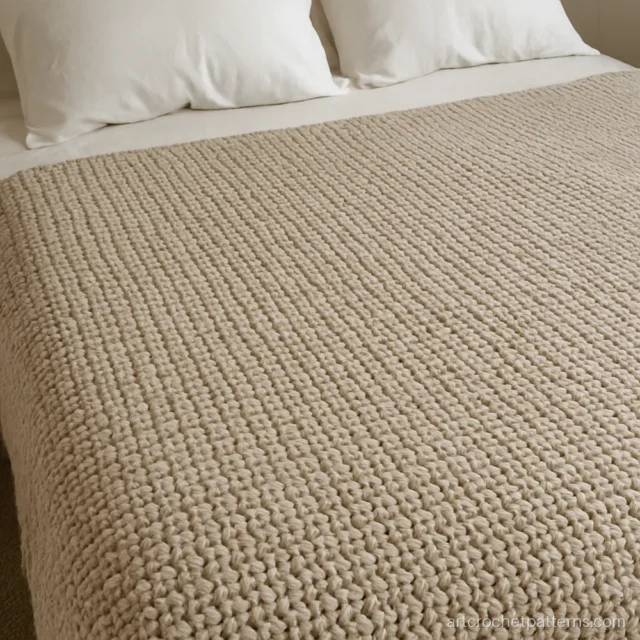
Solid oatmeal throw
One calm color lets the tiny grid of single crochet stitches show. A wool blend makes it springy and very warm.
Maker note: Join new balls at the row edge, never in the middle of a solid blanket, so the tail can hide in the side.
 LevelBeginnerYarnWorsted acrylicHook6 mm (J-10)
Slate gray back loop ridges
Hooking under only the rear strand of each sc builds squishy ridges and a stretchier fabric that feels a lot like knitted garter stitch.
Maker note: BLO rows are shorter. Expect about 20 percent more rows than plain sc for the same length.
 LevelEasyYarnWorsted acrylicHook6 mm (J-10)
Tweedy linen stitch in many colors
Here every sc is followed by a ch 1 that skips a stitch, and a new color on each row blends the shades into a woven tweed. Great for using up scraps.
Maker note: Give each color two rows before you drop it; the idle strand then waits at the same edge and travels up the side. It saves dozens of ends.
 LevelBeginnerYarnDK baby acrylicHook5 mm (H-8)
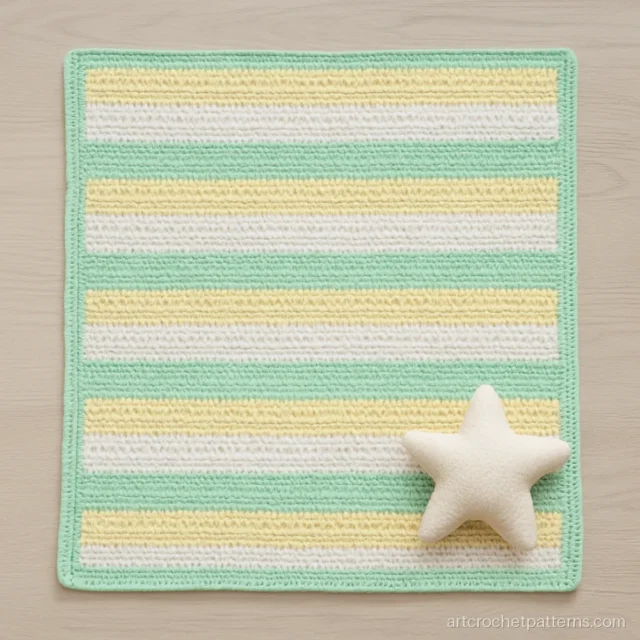
Baby blanket in pastel mini stripes
Thin two row stripes in soft pastels. Packed sc rows leave no gaps for tiny fingers to poke through.
Maker note: Weave baby blanket ends in two directions. No loose strands over 7 inches anywhere.
 LevelIntermediateYarnWorsted cotton blendHook5.5 mm (I-9)
Black and white geometric
The idle color hides inside each stitch and pops out to draw triangles. It is single crochet, but you follow a chart.
Maker note: Keep the carried strand loose. Tight carries pull the blanket narrower in the patterned rows.
Color block single crochet blanket pattern
The finished lapghan is about 36 inches wide and 48 long, sized for the sofa. You will work 60 rows in each color.
Materials: worsted (size 4) yarn, about 1,600 yards (1,460 m) in total, split evenly across 3 colors (A rust, B cream, C olive); J-10 (6 mm) hook; tapestry needle.
Gauge: 13 sc and 15 rows = 4 inches with the J-10 hook. Work a 20 stitch swatch and measure it flat.
- Note: the ch 1 at the start of each row is a turning chain and is not counted. Work the first sc into the first stitch.
- With A, ch 118.
- Row 1: Sc in 2nd ch from hook and in each ch across, turn. (117 sc)
- Row 2: Ch 1, sc in each st across, turn. (117 sc)
- Rows 3 to 60: Rep Row 2. On the last yo of Row 60, pull through with B. (117 sc)
- Rows 61 to 120: With B, rep Row 2. Change to C on the last yo of Row 120. (117 sc)
- Rows 121 to 180: With C, rep Row 2. (117 sc)
- Border: Ch 1, sc evenly around with 3 sc in each corner, working 1 sc into the end of each row along the sides. Join and fasten off.
Single crochet rows look almost the same on both sides, so tie a scrap of yarn to the right side after Row 1. It helps when you count rows and when you place the border.
Chains and yarn for every size
All numbers use the gauge above. A single crochet blanket needs one extra chain for turning. Other dimensions are on crochet blanket sizes.
| Blanket | Width by length | Start with | Rows | Yarn |
|---|---|---|---|---|
| Stroller | 30 by 35 | 99 | 131 | About 950 yd |
| Lapghan | 36 by 48 | 118 | 180 | About 1,600 yd |
| Crib | 45 by 60 | 147 | 225 | About 2,500 yd |
| Throw | 50 by 60 | 163 | 225 | About 2,800 yd |
A very long chain often twists. A foundation single crochet row makes the chain and first row at once, with a stretchy bottom edge.
Single or double: which suits your blanket
| Point | Single crochet | Double crochet |
|---|---|---|
| Speed | Slow, many rows | Roughly twice as fast |
| Warmth | Very warm, few holes | Lighter, airy |
| Drape | Firm unless the hook is large | Soft and floppy |
| Yarn used | More per square inch | Less per square inch |
| Best for | Winter throws, baby, color work | Quick gifts, big beds |
If speed matters more than warmth, try the double crochet blanket pattern instead.
Ways to vary a single stitch crochet blanket
- Back loop only: ridges and extra stretch. See BLO crochet.
- Linen stitch: each sc paired with a ch 1 so the rows interlock like weaving; full steps on linen stitch.
- Between stitches: insert the hook between posts rather than through the V on top, for a thick, nubbly fabric.
- Stripes: change every 2 rows so the unused strands wait at one edge.
- Color work: single crochet is the base of tapestry and graph blankets because the square stitches act like pixels.
Soft rows and straight edges
- Use a hook 1 to 1.5 mm bigger than the label for a softer drape. A J-10 or K-10.5 with worsted is ideal.
- Do not pull each stitch tight. The loop on the hook should slide easily.
- After turning, the first stitch sits right at the base of the ch 1. It is easy to skip, so look for the two loops at the very edge.
- The final sc of every row is small and tucked in. Place a marker in it on each row until it becomes habit.
- Count stitches every 10 rows. With 117 stitches, place a marker every 20 to speed up counting.
Single crochet trouble table
| You notice | Reason | Try this |
|---|---|---|
| Board stiff fabric | Hook too small | Go up 1 mm |
| Blanket narrows | Missing the last stitch | Mark the last sc each row |
| Blanket widens | Working into the turning ch 1 | Skip the ch 1, start in the first st |
| Bottom edge pulls in | Tight chain | Use foundation sc instead |
| Rows slant diagonally | Normal bias from right handed or left handed work | Block it square when finished |
Finish with an edge from blanket borders to frame it.
Questions makers ask
Should a beginner try a single crochet blanket?
Absolutely. The stitch is the first one most people learn, and the dense fabric hides small tension changes. It does take longer than taller stitches, so start with a lap or baby size.
How many hours will a single crochet blanket take?
Expect 35 to 45 hours for the lapghan. A full throw can take 70 hours or more. Many makers keep a quick side project going for variety.
Why is my single crochet blanket so stiff?
The hook is likely too small for the yarn. Go up one or two sizes and relax your grip. Washing and drying acrylic also softens the fabric.
What starting chain fits a single crochet blanket?
Multiply the width in inches by your stitches per inch, then add 1 extra chain. At 13 sc per 4 inches, a 36 inch blanket needs 117 stitches and a chain of 118.
Does a single crochet blanket use more yarn?
Yes. Short, packed stitches eat more yarn for each square inch of fabric than double crochet. A worsted lapghan takes about 1,600 yards.
Do UK patterns use a different name for a single crochet blanket?
Yes: British terms name this stitch double crochet, so the same blanket appears as a double crochet blanket there. The stitch is the same.