
Temperature blanket crochet turns a year of weather into a blanket: you work one row each day in a color that matches that day's temperature, and below you will find the full row pattern, a color chart, yarn planning and six layouts. By the end of the year you have a striped record of hot spells, cold snaps and slow spring warming.
It is a long project but a gentle one. Each row takes about 10 to 15 minutes, so the daily habit is small. The hard parts are planning colors before you start and keeping up when life gets busy. We cover both.
Our pattern uses moss stitch because it blends colors smoothly, lies flat and makes rows short enough that 365 of them fit on a bed.
At a glance
Skill level
EasyYarn
DK (3) acrylic, 10 colorsHook
4.5 mm (7)Stitches used
ch, sc, moss stitchSize
About 45 by 73 inches for a full yearTime
10 to 15 minutes a day for a year
6 temperature blanket crochet designs to make
Every design lists the skill level, yarn and hook, with a note from the maker.
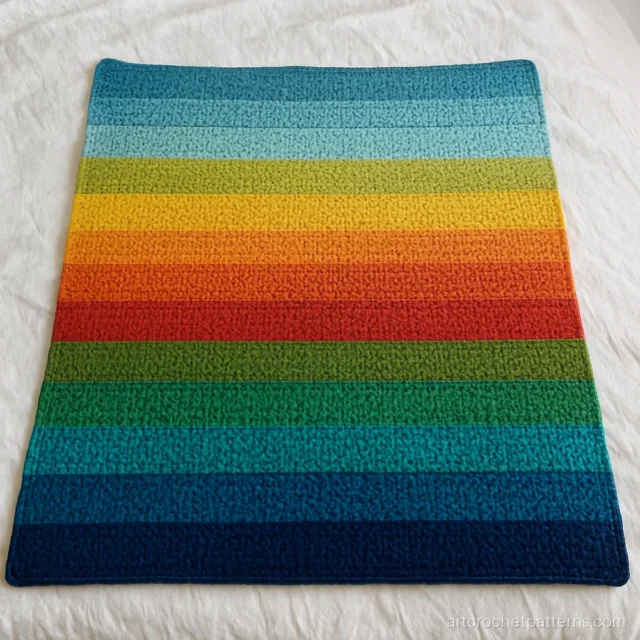 LevelEasyYarnDK acrylicHook4.5 mm (7)
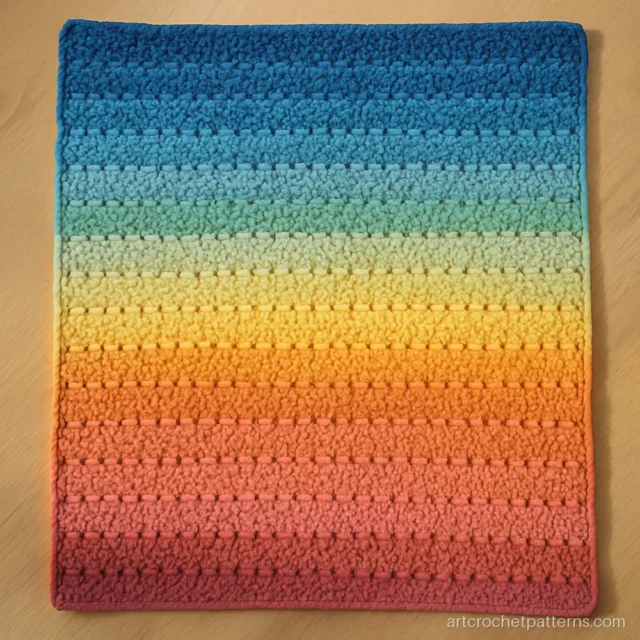
Moss stitch row a day blanket
The pattern on this page after a full year. Winter blues at both ends and warm summer reds in the middle show the seasons at a glance.
Maker note: Keep a notebook with the date, temperature and color for each row. It saves you on catch up days.
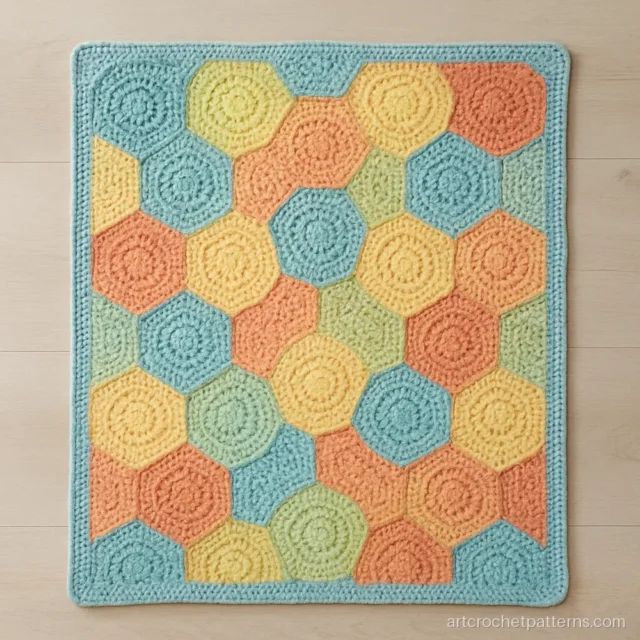 LevelIntermediateYarnDK cotton blendHook4 mm (G-6)
Hexagon a day blanket
One small hexagon per day, with the center for the low and the outer round for the high. Portable and joinable at the end.
Maker note: Join hexagons as you go each week. Leaving 365 for the end is a big, tiring job.
 LevelEasyYarnWorsted wool blendHook5 mm (H-8)
Earth tone square a day
A muted palette of earth colors instead of a rainbow. Solid squares, one per day, make a quilt like grid.
Maker note: Pick a palette in light to dark order of one family so the blanket reads as calm, not busy.
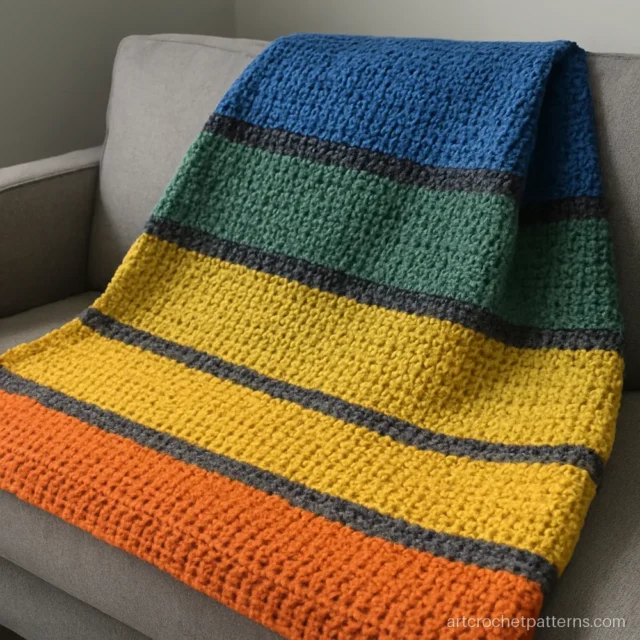 LevelEasyYarnDK acrylicHook4.5 mm (7)
Half double rows with month dividers
A charcoal row between months makes it easy to find any date. Half double crochet rows grow a little faster than moss stitch.
Maker note: Divider rows add 11 rows. Plan your width so the extra length still fits the bed.
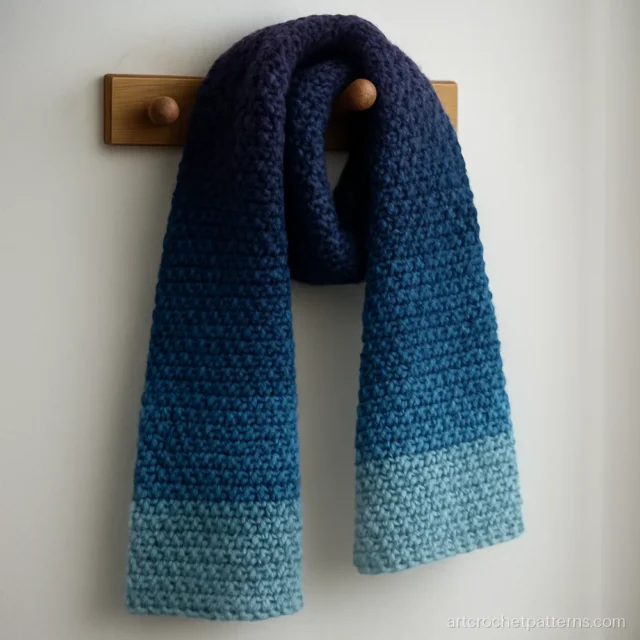 LevelBeginnerYarnDK woolHook4.5 mm (7)
Temperature scarf for one season
Too big a commitment? Work two short rows a day for three winter months and you get a scarf. It teaches the habit in a smaller piece.
Maker note: Work rows the short way, about 8 inches wide. Ninety rows of moss stitch give a scarf near 18 inches long, so work two rows a day.
 LevelEasyYarnWorsted acrylicHook5.5 mm (I-9)
Granny stripe with high and low
Two rows of granny clusters per day: the first for the low, the second for the high. Open clusters use less yarn.
Maker note: Two rows a day doubles the length, so make the blanket narrower or work half the year.
Crochet temperature blanket pattern in moss stitch
Materials: DK (3) acrylic in 10 colors, about 2,600 to 3,400 yards in total, a 4.5 mm hook and a blunt needle.
Gauge: in moss stitch, 4 inches holds 18 sts across and 20 rows up. Each row is about 45 inches wide and uses roughly 8 to 10 yards.
Notes: Rows open with ch 1, which you never count. Count each sc and each ch-1 space as one stitch. Row 1 is your first day. For a new day's color, draw the fresh yarn through the two loops of the final sc of the old row.
- Foundation: ch 202 in the color for day 1.
- Row 1 (day 1): sc in 2nd ch from hook, *ch 1, sk next ch, sc in next ch; rep from * across (101 sc, 100 ch-1 sps: 201 sts)
- Row 2 (day 2): ch 1, turn, sc in first sc, sc in next ch-1 sp, *ch 1, sk next sc, sc in next ch-1 sp; rep from * to last st, sc in last sc (201 sts)
- Row 3 (day 3): ch 1, turn, sc in first sc, *ch 1, sk next sc, sc in next ch-1 sp; rep from * to last 2 sts, ch 1, sk next sc, sc in last sc (201 sts)
- Rows 4 to 365: rep Rows 2 and 3, one row per day, in the color for that day.
Finish with a border in a neutral or in the color of the year's most common temperature. See crochet blanket border for edges that hide side tails.
Temperature color chart (daily high, Fahrenheit)
| Degrees F | Color |
|---|---|
| Below 20 | Deep plum |
| 20 to 29 | Navy |
| 30 to 39 | Royal blue |
| 40 to 49 | Sky blue |
| 50 to 59 | Teal |
| 60 to 69 | Leaf green |
| 70 to 79 | Lemon yellow |
| 80 to 89 | Marigold |
| 90 to 99 | Orange |
| 100 and up | Brick red |
This chart suits most of the US. Tailor it to where you live: look up last year's daily highs for your town and count how many days fall in each band. If 120 days sit between 70 and 89, split that range into 5 degree steps with two colors each so summer is not one long yellow stripe. If you never drop below 30, drop the coldest colors and give the warm end more shades.
How much yarn per color
Each row uses about 8 to 10 yards, so a color's yardage is roughly the number of days in its band times 9. Some quick math:
- A color used on 20 days needs about 180 yards, one skein.
- A color used on 60 days needs about 540 yards, two or three skeins.
- Keep one extra skein of your two busiest colors; dye lots can be hard to match months later.
Want a different size? The crochet blanket sizes planner works out the chain from your swatch. Keep in mind that 365 rows is fixed, so length depends only on row height. A taller stitch like dc would stretch 365 rows to roughly 15 feet, which is why short stitches are the norm for a temperature blanket.
Keeping up and staying sane
- Batch it. Many makers crochet a week of rows every Sunday. Daily is nice but not required.
- Log as you go. Write the date, temperature and color in a notebook or on a printed calendar.
- Tame the tails. Two tails per row adds up to 730 ends. Hold both tails flat against the stitches you are working into and enclose them in your next ten stitches, then snip. Or carry a color up the side if it returns within four rows.
- Catch up kindly. If you fall behind, you can always look up past temperatures and catch up later.
Swapping shades neatly as each row ends is the one real skill this blanket asks of you, and our color changing lesson walks through it.
Temperature blanket mistakes and fixes
| Problem | Why | Fix |
|---|---|---|
| Blanket gets narrower over months | Tension tightens as you relax into the habit | Measure width every month and change hook size if needed |
| Summer is all one color | Bands too wide for your climate | Split busy bands into 5 degree steps |
| Ran out of a color | Underestimated days in that band | Buy extra early, or plan a close shade as a backup |
| Too long for the bed | Stitch too tall | Use moss or sc, or make it two half blankets joined side by side |
Other temperature blanket crochet layouts
Squares or hexagons: make one small motif a day and join them at the end of each month. The hexagon crochet pattern page has a motif that works well. High and low: two rows a day, one for each. Shorter projects: a temperature scarf for one season, or a baby blanket that records the first 100 days of a new baby's life. Every other blanket style is listed in the crochet blanket hub.
Questions makers ask
What is a temperature blanket?
A blanket where each row or motif records one day's temperature with a color. After a year, the stripes show the seasons and the weather of a place.
What stitch is best for a crochet temperature blanket?
Short, flat stitches like moss stitch or single crochet. Taller stitches make 365 rows far too long for a bed.
How many colors do I need for a temperature blanket?
Most use 10 to 14 colors. Fewer colors make wide stripes; more colors show small changes. Look at last year's temperatures for your town to decide.
Should I use the high or average temperature?
The daily high is the most common choice and the easiest to look up. Some makers use the average or work two rows for high and low.
How big is a temperature blanket?
Our moss stitch version is about 45 by 73 inches after 365 rows. Width depends on your chain, length on your row height.
Can I start a temperature blanket in the middle of the year?
Yes. Start on any date, like a birthday, and work 365 days from there. Past temperatures are easy to look up if you want to start earlier.