
Choosing crochet yarn means picking two things: a weight, which is how thick the strand is, and a fiber, which decides how the finished piece feels, washes and holds its shape. This guide explains both, then shows how to read a yarn label, hold the working yarn and join a new ball without a lump.
For a first project, pick a smooth worsted weight yarn in a light color. You can see every stitch, and it works with the 5 mm and 5.5 mm hooks most beginners own.
At a glance
Best to learn on
Smooth worsted acrylic or cottonWeights
0 Lace to 7 JumboFor amigurumi
Worsted or DK cotton or acrylicHook
Follow the label, then swatchUK term
Worsted is close to aran; gauge is tension
Crochet yarn weights from lace to jumbo
| Weight | Also called | Rough sc per 4 inches | Good for |
|---|---|---|---|
| 0 Lace | Thread, cobweb | Usually given in dc, 32 or more | Doilies, lace edgings |
| 1 Super fine | Fingering, sock | 21 to 32 | Shawls, socks, tiny toys |
| 2 Fine | Sport, baby | 16 to 20 | Baby clothes |
| 3 Light | DK | 12 to 17 | Tops, hats, smaller amigurumi |
| 4 Medium | Worsted, aran | 11 to 14 | Blankets, beanies, bags |
| 5 Bulky | Chunky | 8 to 11 | Scarves, cowls, quick hats |
| 6 Super bulky | Roving | 7 to 9 | Thick yarn blankets, baskets |
| 7 Jumbo | Chenille jumbo | 6 or fewer | Rugs, very fast throws |
Fewer stitches per 4 inches means a thicker strand. For the hook that matches each weight, steel to jumbo, open the size chart.
Types of yarn for crochet by fiber
| Fiber | Feel and behavior | Use it for |
|---|---|---|
| Acrylic | Soft, light, machine washable, many colors | Blankets, toys, first projects |
| Cotton | Firm, no stretch, absorbs water, crisp stitches | Dishcloths, bags, summer tops, amigurumi |
| Wool | Warm, springy, blocks well, can felt | Hats, mittens, sweaters |
| Wool blends | Wool warmth with easier care | Everyday garments |
| Bamboo and blends | Silky, drapes, a little slippery | Shawls and tops |
| Chenille and velvet | Plush, hides stitches, hard to frog | Soft toys and blankets in simple stitches |
| T-shirt yarn | Thick, stretchy knit strips | Baskets, rugs, bags |
Wool yarn for crochet is the warmest choice for winter wear, but read the label: plain wool shrinks and felts in a hot wash. For a deeper look at fiber choice by project, see best yarn for crochet and cotton yarn for crochet.
In pictures
What the work should look like, with the yarn and hook used for each sample.
 LevelBeginnerYarnMixed weightsHook2.75 mm to 15 mm
Yarn weights from fingering to jumbo
Six balls in six weights, each with a short chain beside it. The jump in thickness shows why every weight needs its own hook range.
Maker note: Unsure of a weight? Wrap the strand around a ruler and count wraps in one inch.
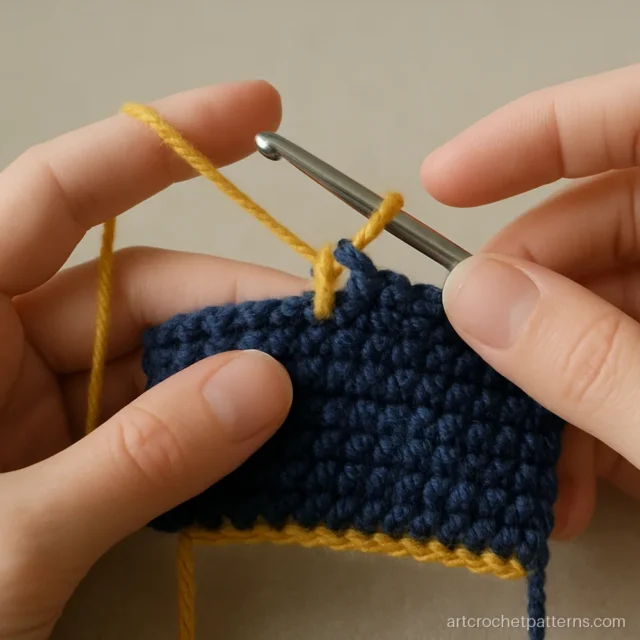 LevelBeginnerYarnWorsted acrylicHook5 mm (H-8)
Joining a new color on the last yarn over
The old color finishes the stitch halfway, the new color pulls through the final loops. The next stitch starts cleanly in the new shade.
Maker note: Leave both tails 6 inches long and weave them in opposite directions.
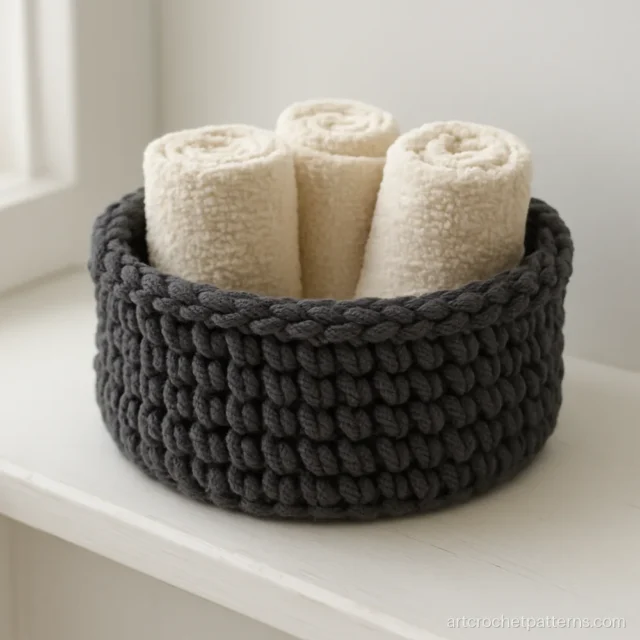 LevelEasyYarnT-shirt yarnHook10 mm (N/P-15)
T-shirt yarn round basket
T-shirt yarn is cut from knit fabric, so it is thick and stretchy. Single crochet rounds with a 10 mm hook make a basket that stands on its own.
Maker note: Pull each stitch firm. T-shirt yarn stretches as you work and loosens later.
How to read a yarn label
- Weight number in a small yarn ball symbol, from 0 to 7.
- Fiber content in percent.
- Length and weight of the ball, in yards and grams. Compare yards, not grams, when swapping yarns.
- Suggested hook and sometimes a crochet gauge over 4 inches.
- Dye lot number. Buy every ball for one project from the same lot; colors shift slightly between lots.
- Care symbols for washing and drying.
Keep one label from each project in a notebook so you know how to wash the piece later.
How to hold crochet yarn
Your yarn hand feeds the strand at an even tension. A common way: bring the yarn from the ball up between your little finger and ring finger, wrap it once around the little finger, then pass it over the back of your index finger. Hold the work between thumb and middle finger just below the hook.
- Raise the index finger to tighten the yarn, lower it to loosen.
- Keep the strand moving freely. If it drags, take off the wrap around the little finger.
- If the yarn slips too fast, wrap it twice or try a tension ring.
Your other hand matters just as much. The pencil and knife grips for the hook are both shown in how to crochet.
How to join yarn in crochet
There are three clean ways to change yarn in crochet, whether you are adding a new ball or a new color.
- Join on the last yarn over. Work the last stitch with the old yarn until two loops remain. Drop the old yarn, yarn over with the new one and pull it through. This is the standard join for stripes. The color change guide shows it for every stitch.
- Russian join. Thread the old end and sew it up through the core of its own strand for two inches; a small loop remains. Pass the fresh yarn's end through that loop and sew it into its own core in turn. Pull both, and the loops lock with nothing to hide later.
- Magic knot. Tie each tail around the other strand in an overhand knot, pull the knots together and trim close. Strong and quick, but the knot can show in thin yarn.
Skip plain square knots mid row. It works loose and leaves a hard lump.
Best yarn for amigurumi
Amigurumi yarn should be smooth, firm and low in fuzz so the stitches stay crisp. Worsted or DK cotton gives clear stitch definition and holds shape. Acrylic is softer, comes in more colors, and works well too. Go 0.5 to 1 mm under the label's hook; dense fabric keeps fiberfill out of sight. Chenille and velvet yarns make very soft toys but hide stitches, so mark every round. Start with the amigurumi patterns section.
Thick yarn and chunky yarn crochet patterns
Bulky and super bulky yarn grows fast and hides small tension slips, which makes it rewarding for beginners. Pick simple stitches, such as single crochet, half double crochet or the moss stitch, because fancy textures get lost in thick strands. Keep projects that sit against skin in soft acrylic or wool blends. A yarn bowl for crochet helps here: the heavy ball stays in the bowl and feeds evenly instead of rolling off the couch. For blanket ideas, see chunky crochet blanket.
Questions makers ask
Which yarn should a crochet beginner buy?
Pale, smooth worsted in acrylic or cotton. It is easy to see, it does not split, and it suits a 5 mm hook.
Can I use knitting yarn for crochet?
Yes. Yarn is the same for both crafts. Only the tool and the stitches change.
What is the difference between worsted and aran?
Both are weight 4 medium. Aran is a little thicker than worsted, so you may want to go up 0.5 mm.
How do I change yarn in crochet without a knot?
Use the Russian join, where both ends are buried inside the yarn itself. Or join during the final yarn over of a stitch and weave both tails in later.
Is fluffy yarn good for crochet?
It makes soft results but hides stitches, so it is hard for beginners. Use a simple stitch and count carefully, because frogging fluffy yarn is difficult.
Why does my yarn twist as I crochet?
Every stitch adds a little twist. Let the ball spin freely in a bowl, or drop the hook and let the work hang so the yarn unwinds.