
Cotton yarn for crochet makes firm, crisp fabric that holds its shape, soaks up water and stays cool against the skin. That makes it the first choice for dishcloths, bags, summer tops and many toys. It also behaves differently from acrylic or wool, so this guide covers the kinds of cotton, thread sizes, and how to keep your hands and stitches happy while you work it.
New to cotton? Start with plain worsted cotton on an H-8 hook, and make the dishcloth from crochet patterns for beginners. One evening will show you how it feels on the hook.
At a glance
Feel
Firm, cool, no stretchBest for
Dishcloths, bags, summer tops, toysHook
Same as label, or 0.5 mm largerKinds
Plain, mercerized, blends, threadCare
Machine wash; may shrink in hot water
Why choose cotton yarn for crochet
- No stretch. Stitches stay where you put them, so bags, baskets and coasters keep their shape.
- Absorbent. Cotton soaks up water, which is why it makes the best dishcloths and bath mitts.
- Heat tolerant. It does not melt like acrylic, so use it for potholders and trivets.
- Breathable. Cotton tops and shawls feel cool in summer.
- Crisp stitch definition. Textured stitches and amigurumi faces read clearly.
The tradeoff: cotton is heavier, less forgiving of uneven tension, and harder on the hands than acrylic. Garments can grow longer as they hang.
Kinds of cotton crochet yarn
| Kind | What it is | Use it for |
|---|---|---|
| Plain cotton | Matte, soft, a little fuzzy, very absorbent | Dishcloths, washcloths, bath items |
| Mercerized cotton | Treated so it is smoother, stronger and slightly shiny | Amigurumi, lace, tops, anything with fine detail |
| Cotton and acrylic blend | Lighter and softer, a little stretch | Baby blankets, cardigans, everyday wear |
| Cotton and linen or bamboo blend | Cool, drapey, with a slight slub | Summer tops and shawls |
| Recycled cotton | Made from cotton scraps, often a soft heathered look | Bags, rugs, home pieces |
| Crochet thread | Tightly twisted fine cotton, numbered by thickness | Doilies, edgings, lace jewelry |
When a pattern says 100 cotton yarn for crochet, it usually means it needs absorbency or heat safety. Swap in a blend only for wearables.
In pictures
What the work should look like, with the yarn and hook used for each sample.
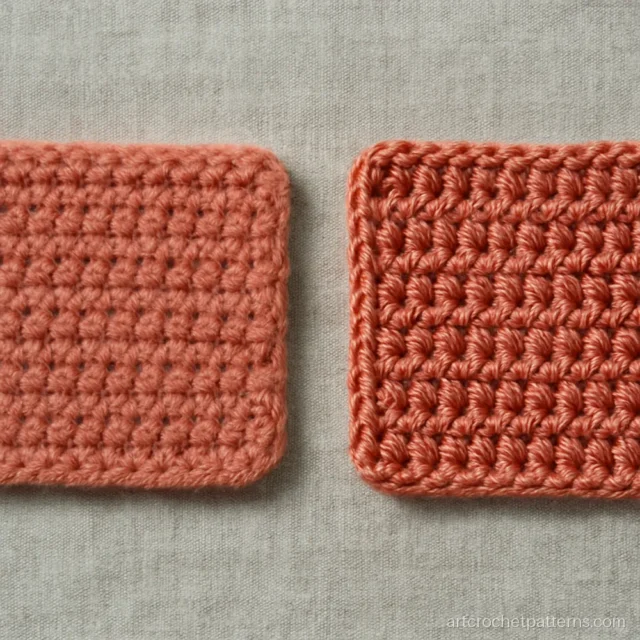 LevelBeginnerYarnWorsted and DK cottonHook4 mm and 5 mm
Plain and mercerized cotton swatches
Both are 100% cotton yarn for crochet in the same coral. The mercerized swatch on the right has a soft shine and sharper stitches.
Maker note: Use mercerized cotton when stitch detail matters, plain cotton when you need it to absorb water.
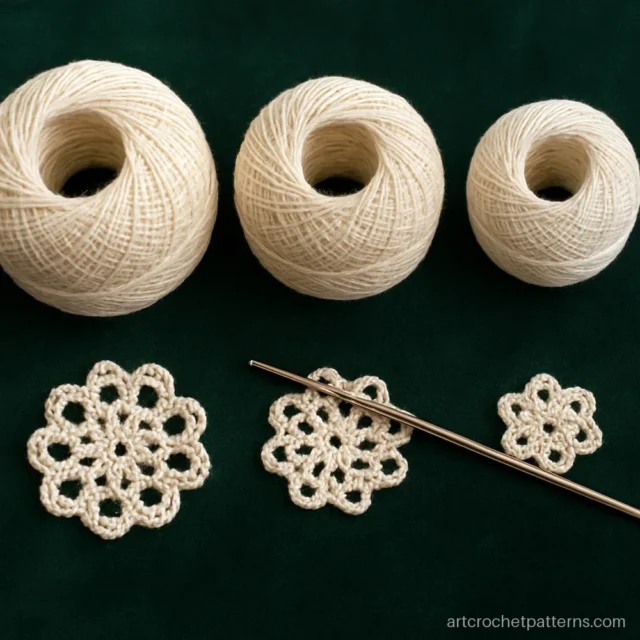 LevelIntermediateYarnCotton threadHookSteel 2 to steel 10
Crochet thread in three sizes
The higher the thread number, the finer the strand. Each ball sits beside a small lace sample worked with a matching steel hook.
Maker note: Size 10 thread is the easiest place to start lace. Finer sizes need very good light.
 LevelEasyYarnWorsted cottonHook5 mm (H-8)
Striped cotton tote bag
Single crochet in worsted cotton makes a tote that does not sag. Cotton handles stay the length you made them.
Maker note: Line the bag with fabric if you will carry heavy books; even cotton stretches a little under load.
Crochet thread sizes and projects
Crochet thread is numbered backward: the higher the number, the finer the thread. Each needs a steel hook, and sizes vary by maker, so check the label.
| Thread size | Usual steel hook | Crochet thread projects |
|---|---|---|
| Size 3 | About 2.25 to 2.75 mm | Placemats, bags, sturdier lace |
| Size 5 | About 1.75 to 2 mm | Edgings, light tops |
| Size 10 | Around 1.65 mm (steel 7) | Doilies, table runners, ornaments |
| Size 20 | About 1.25 mm | Fine doilies, collars |
| Size 30 and up | 1 mm and smaller | Very fine lace, bookmarks, jewelry |
Size 10 is where most crochet thread patterns begin. The steel hook table on the size chart page lists more, and try crochet doily patterns once you are comfortable.
What to make with cotton
Many modern crochet patterns are written with cotton in mind because summer pieces are so popular. A few good matches:
- Kitchen and bath: dishcloths, coasters, potholders, scrubbies
- Bags: market bags, totes and pouches that keep their shape
- Wear: summer tops, bucket hats, bandanas
- Toys: amigurumi with crisp details, especially for children, since cotton washes well
Avoid cotton for winter hats and mittens. It is not warm, and it holds damp against the skin.
Working with cotton: tips for even stitches
- Go up 0.5 mm from your usual hook for garments. Cotton has no give, so a slightly bigger hook keeps the fabric from feeling stiff.
- Keep tension steady. Uneven stitches show more in cotton than in fuzzy acrylic.
- If plain cotton splits, switch to a blunter, rounded tip.
- Take breaks. Pulling non stretchy yarn is hard on the hands; an ergonomic hook helps.
- Block cotton pieces with water or steam. It relaxes the stitches and sets the shape.
When cotton misbehaves
| Problem | Cause | Fix |
|---|---|---|
| Cotton fabric stiff as card | Worked on too small a hook | Go to the next half size up |
| Top grew longer after wearing | Cotton is heavy and stretches down under its own weight | Choose a cotton blend or make the body a little shorter |
| Dishcloth shrank | Hot wash and dryer tighten plain cotton | Expected; wash a swatch first if size matters |
| Hand aches | No stretch means you pull harder | Loosen your grip and use an ergonomic handle |
| Colors bled in the wash | Deep dyes in cotton can run | Wash bright pieces alone in cold water the first time |
Washing cotton crochet
Always follow the yarn label. Most plain cotton handles a warm machine wash, and dishcloths can take hot water. Expect some shrinking in length the first time. Cotton garments last longer if you wash on cool, then lay flat to dry so the weight of the water does not stretch them. Mercerized cotton keeps its shine best on a gentle cycle. For other fibers, compare with the crochet yarn guide and the best yarn for crochet.
Questions makers ask
Is cotton yarn good for beginners?
Yes for flat projects like dishcloths, because every stitch shows plainly. It is less forgiving of uneven tension than acrylic, so a soft acrylic may feel easier for the very first rows.
Is 100% cotton yarn best for dishcloths?
Yes. Pure cotton soaks up spills and survives hot laundry cycles. Blends with acrylic push water around instead of soaking it up.
How is crochet thread different from cotton yarn?
Crochet thread is a fine, tightly twisted cotton made for lace and steel hooks. Cotton yarn is thicker, from fingering up to bulky, and uses regular hooks.
Does cotton yarn shrink?
Plain cotton can shrink in length in a hot wash and dryer. Mercerized cotton shrinks less. Wash a swatch first if the finished size matters.
Can I use cotton for amigurumi?
Yes, and many toy makers prefer it. Mercerized cotton gives crisp, clean stitches and washes well.
Why is my cotton crochet so stiff?
Cotton has no stretch, so a tight hook makes dense fabric. Choose a hook one half size bigger and block the piece with water.