
Good crochet books do something a single pattern cannot: they let you flip, compare and come back years later. A stitch dictionary on the side table answers "what would this blanket look like in a shell stitch?" in a minute, with no searching and no screen.
Rather than list titles, this guide explains the main kinds of crochet book, what each one is good for, and the details to check before you buy. With that, you can judge any book in a shop, a library or a secondhand sale on your own.
At a glance
Most useful first
A stitch dictionary with chartsFor learning
A technique reference with close photosFor projects
Pattern books on one themeCheck for
US or UK terms, charts, sizing, errataGood sources
Library, yarn shop, secondhand sales
The main types of crochet books
| Kind of book | What is inside | Who gets the most from it |
|---|---|---|
| Stitch dictionary | Hundreds of stitch patterns, each with a swatch photo, written rows and often a chart | Anyone who likes to swap stitches in patterns or design |
| Technique reference | Step photos for stitches, joins, edgings, increases and finishing | Beginners and self taught makers filling gaps |
| Amigurumi book | Toy patterns built from shared base shapes | Toy makers who want a set of matching animals |
| Motif book | Squares, hexagons, flowers and joining methods | Blanket makers and scrap yarn users |
| Garment book | Sweaters, tops and cardigans in several sizes | Confident makers ready to measure and fit |
| Themed pattern book | A set of projects on one idea, such as baby gifts or home decor | Gift makers and anyone who likes a collection |
Why a stitch dictionary is the first crochet book to own
A stitch dictionary changes how you use every other pattern. If a blanket calls for plain double crochet, you can pick a ripple, a puff or a waffle texture instead and work out the stitch multiple from the book. Look for one that gives each stitch as a multiple, for example "multiple of 6 plus 2", so you know how long to make your foundation chain.
The best ones show the swatch large and in a pale color, include a symbol chart next to the words, and group stitches by type: basics, textures, lace, clusters, post stitches. Pair it with the stitch guides here when a step is not clear.
In pictures
What the work should look like, with the yarn and hook used for each sample.
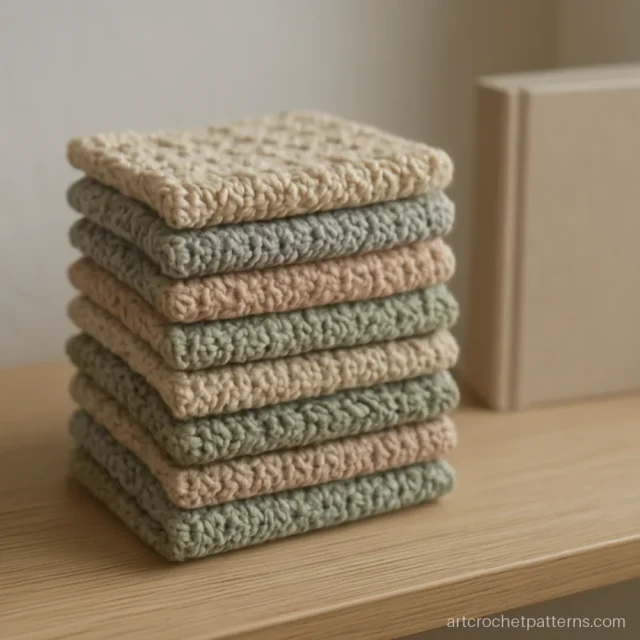 LevelEasyYarnDK cottonHook4 mm (G-6)
Swatches worked from a stitch dictionary
Working one swatch from each page of a stitch dictionary builds a library you can touch. Pin a paper tag to each with the page and hook size.
Maker note: Use one yarn and one hook for every swatch so you can compare textures fairly.
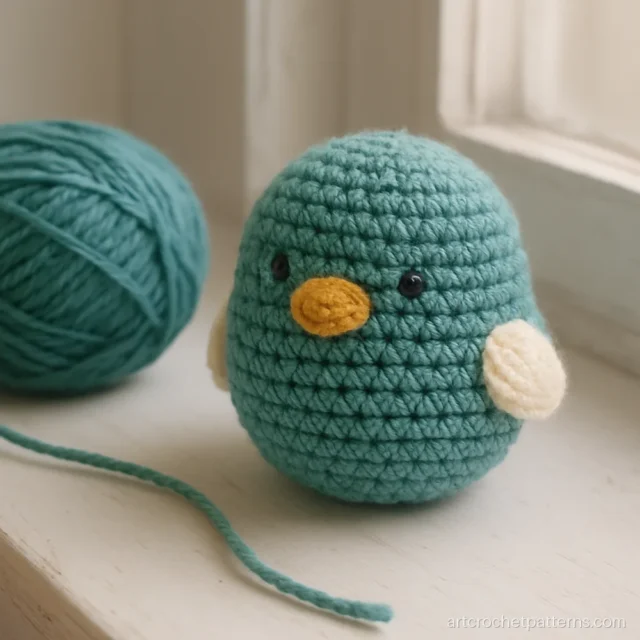 LevelEasyYarnWorsted cottonHook3.5 mm (E-4)
Small amigurumi bird made from a toy book
Toy books usually build from one base shape. Once you can make this round body, the same rounds become a chick, an owl or a sparrow.
Maker note: Choose toy books that give a stitch count for every round, so you can check yourself as you go.
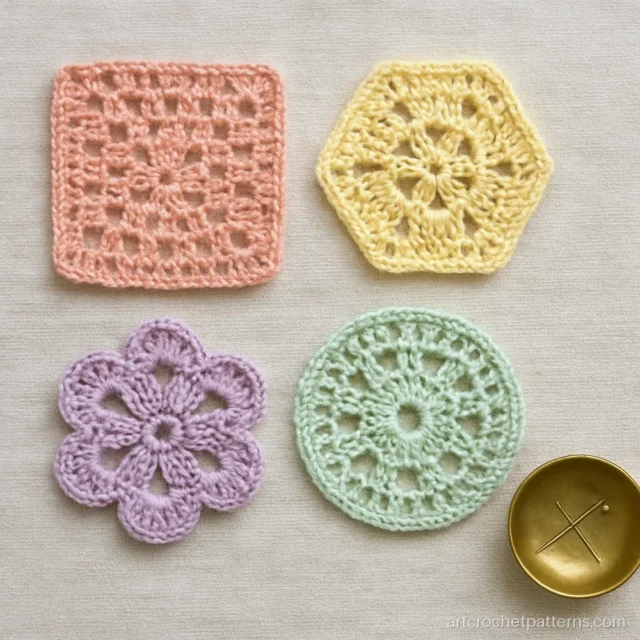 LevelIntermediateYarnSport cottonHook3.5 mm (E-4)
Motif sampler squares from a motif book
Motif books are a joy for scrap yarn. Make one of each shape, then choose a favorite for a blanket or bag.
Maker note: Block every motif to the same size before you compare them; lace shrinks and wrinkles until it is pinned.
Crochet pattern books for projects
A pattern book holds a set of finished designs, often 10 to 30, around one theme. Strong ones share a yarn weight across projects, so one trip to the yarn shop covers several makes. Before buying, flip to two patterns you would actually make and read them through. If the steps make sense and the photos show the details you care about, the rest of the book is likely written to the same standard.
- Amigurumi: look for stitch counts after every round and clear assembly photos.
- Blankets: look for finished sizes and total yardage per size.
- Wearables: look for a schematic with measurements and a range of sizes.
Thin leaflets with only a few patterns are a lighter way to try a designer's style before committing to a full book.
What to check before you buy a crochet book
- Terms. Find a note saying US or UK. A UK book uses dc for the US sc. The abbreviations guide has a swap chart.
- Charts. Lace and motif books should include diagrams, not only words.
- Photos. Every project needs a clear finished photo, and technique books need close shots of the hook in the loops.
- Sizing. Garments should list finished measurements, not only S, M and L.
- Yarn details. Weight, fiber and yardage should be listed, so you can substitute easily.
- Binding. A spiral or lay flat binding stays open next to you while you work.
- Corrections. Ask whether the publisher posts an errata list for typos in stitch counts.
Older crochet books and leaflets
Vintage booklets from the twentieth century can be wonderful for doilies, edgings and thread work. They often assume a lot, though. Steel hook sizes may use old numbering, yarn names no longer exist, and gauge may be missing. Treat them as a puzzle: swatch first, match the look, and note the hook in millimeters you ended up using. Old letters and numbers translate easily with the hook size chart.
Libraries and secondhand sales are the easiest places to try many books without filling your shelves. Borrow one, make a project, and buy only the books you keep reaching for.
Building a small, useful shelf
Three or four well chosen books cover most needs. A sensible order is one technique reference for when you get stuck, one stitch dictionary for ideas, and one or two pattern books in the area you love most, whether that is toys, motifs or garments. Add more only when you have worked through a few projects from each.
For free designs to try in the meantime, browse the pattern library.
Questions makers ask
What is the best kind of crochet book for a beginner?
A technique reference with large, close photos of each step. It answers the small questions that patterns skip, like where to insert the hook or how to count a turning chain.
Is a crochet pattern book better than single patterns?
A book gives you a set of designs that usually share a yarn weight and a consistent writing style. Single patterns let you pick exactly what you want. Many makers enjoy both.
What is a stitch dictionary?
A book of stitch patterns with a swatch photo and written instructions, and often a chart, for each one. It lists the stitch multiple so you can use the stitch in any project.
Are older crochet books still useful?
Yes, especially for lace and edgings. Expect missing gauge and old hook numbers, and plan to swatch before you start a full project.
How can I tell if a crochet book uses UK terms?
Look at the abbreviations page. If it lists dc but not sc, and tr for a mid height stitch, it is most likely written in UK terms.