
The crochet supplies you truly need to begin fit in a sandwich bag: one hook, one skein of yarn, small scissors, a blunt needle and a few stitch markers. Everything else on the craft store wall is optional, and some of it is better bought once you know what you like to make.
This page lists the core kit first, then the helpful extras grouped by project type, so you can see what each tool actually does before it lands in your basket. If you would rather buy a boxed set, the crochet kit guide explains what a good one includes.
At a glance
Core tools
Hook, yarn, scissors, tapestry needle, markersGood first hook
H-8 (5 mm), or I-9 if you hold yarn looselyGood first yarn
Light colored worsted acrylicAdd later
Tape measure, row counter, blocking matsStorage
A zip pouch or hook case
What do you need to crochet? The five core crochet supplies
- A hook. Start with one aluminum or ergonomic hook, marked H-8 (a 5 mm shaft). That size and its neighbor I-9 suit worsted yarn, the easiest weight to learn on. Read more in the crochet hook guide.
- Yarn. One skein of smooth, pale, medium weight acrylic. It shows stitches clearly and forgives being pulled out.
- Scissors. Small, sharp ones that cut cleanly instead of fraying the end.
- A tapestry needle. Blunt tip and a big eye, for weaving in ends and sewing pieces together.
- Stitch markers. Locking ones mark the first stitch of a round or hold a live loop when you put your work down. A safety pin or a scrap of contrast yarn does the same job.
That is it. With these five items you can work through most of the beginner patterns on this site.
Helpful crochet tools to add next
| Tool | What it does | When you will want it |
|---|---|---|
| Tape measure | Checks gauge and finished size | Your first hat or garment |
| Row counter | Keeps count so you can stop mid row | Long blankets and repeats |
| Extra hooks | Lets you go up or down a size to match gauge | When a project comes out too big or small |
| Hook case | Holds hooks in size order | Once you own more than three |
| Yarn bowl or holder | Stops the ball rolling away | Working on the sofa with a pet nearby |
| Tension ring | Evens out a loose or tight hold | If your rows wobble in height |
Each of these has its own page: stitch markers, hook cases, yarn holders and the tension ring.
In pictures
What the work should look like, with the yarn and hook used for each sample.
 LevelBeginnerYarnWorsted acrylicHook5 mm (H-8)
Starter crochet tools laid out on oak
This small set covers almost every beginner pattern. A half finished swatch sits in the middle to show the hook and yarn match.
Maker note: Keep this set in one pouch that lives with your project, so the scissors never wander off to the kitchen.
 LevelEasyYarnDK cottonHook3 mm
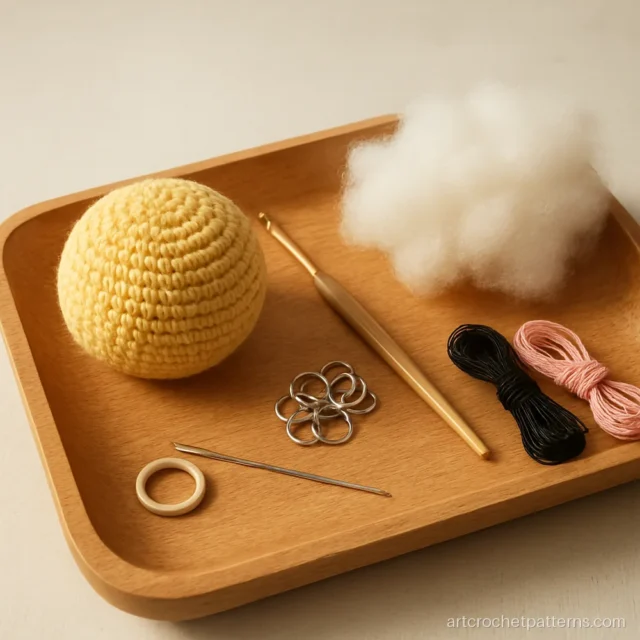
Toy making tools in a shallow wooden tray
Toys need a smaller hook, a bag of polyester fiberfill and plenty of markers. A half stuffed ball shows why the fabric has to be tight.
Maker note: Embroider the eyes with floss on any gift for under threes, because snap-in eyes and buttons can be chewed free.
 LevelIntermediateYarnDK woolHook4 mm (G-6)
Granny squares pinned on blocking mats
Foam mats with a printed grid and rust proof pins let you square up motifs before joining. They are an extra, not a starting need.
Maker note: Pin squares while damp and leave them until dry right through, usually a full day.
Extra crochet materials by project type
Amigurumi and toys
Polyester fiberfill, a smaller hook than the label suggests, by a step or two, plenty of markers for spiral rounds, and embroidery floss for faces. Keep safety eyes for toys that will never reach a baby or a child under 3.
Blankets and motifs
A row counter, a large project bag, and blocking mats if you join granny squares. Get every skein in one trip, from a single dye lot.
Garments
A flexible tape measure, a few sizes of hooks for gauge swatches, and locking markers to hold seams together while you sew.
Dishcloths and bags
Cotton yarn and a slightly larger needle, since cotton tails are thicker to weave in.
Shopping at a crochet store without overbuying
A big craft store, a local yarn shop and online sellers all stock crochet stuff, but they suit different needs. A craft store has acrylic, cotton and basic hooks in every size. A local yarn shop tends to carry more wool and hand dyed skeins, and the staff can help you match yarn to a pattern. Online shops give the widest choice but you cannot squeeze the skein first.
- Take the pattern with you, or at least the yarn weight, yardage and hook size.
- Check the label for a dye lot number and buy one extra skein for large pieces.
- Feel the hook in your hand. Grip shape matters more than looks.
- Skip the giant tool sets until you know which sizes you use.
Crochet supplies you can skip for now
Plenty of tools look useful in the aisle but sit unused for months. Hold off on these until a pattern asks for them.
- Huge hook sets. You will probably use three or four sizes in your first year.
- Blocking wires. They are for lace shawls with long straight edges.
- Yarn swift and ball winder. Only needed if you buy yarn in loose hanks.
- Novelty yarn bundles. Fuzzy and eyelash yarns hide stitches and make learning harder.
For your first yarn choice, the best yarn for crochet guide explains which fibers forgive mistakes.
Keeping your kit tidy
A small zip pouch for each project saves a lot of hunting. Put the hook, needle, markers and pattern inside with the yarn. Store yarn away from direct sun, which fades color, and keep wool in a sealed bag with a cedar block to discourage moths. Wipe aluminum hooks clean if they start to drag; a hook that catches can snag yarn and slow you down.
When you travel, a compact case with a blunt tipped hook and small scissors is the easiest set to pack. The flying with crochet hooks page covers what airport screening allows.
Questions makers ask
What are the basic crochet supplies for a beginner?
An H-8 or I-9 hook, a skein of light colored worsted yarn, small scissors, a blunt tapestry needle and a few stitch markers. That set covers almost every beginner pattern.
Is it better to buy a crochet kit or separate supplies?
A kit is handy when it is built around one project and includes good yarn. Buying separately lets you choose a comfortable hook and the exact yarn you want, which often feels better in the hand.
What crochet tool do people forget to buy?
The tapestry needle. Without it you cannot weave in ends or sew pieces together, and a sharp sewing needle splits the yarn.
Do I need stitch markers to crochet?
They are not strictly required, but they save a lot of counting. For spiral rounds in amigurumi they are close to essential. A scrap of yarn in a contrast color works in a pinch.
Where should I buy crochet supplies?
A big craft store is easiest for acrylic yarn and basic hooks. A local yarn shop offers wider fiber choice and help with patterns. Online stores have the most variety.