
Textured crochet stitches raise the surface of the fabric with bumps, ridges, grains or knit like columns, so a plain color suddenly has depth you can see and feel. Some use extra loops packed into one stitch, some wrap around the posts of earlier rows, and some just change where the hook goes in.
This page sorts the most useful texture stitches into four families, compares a dozen of them side by side, and ends with a counted bobble dot cloth so you can try a raised stitch today. Each stitch name links to its own full lesson.
At a glance
Skill level
Beginner to intermediateBest yarn
Smooth, plied, light coloredHook
Label size, or half a size upGood for
Blankets, cloths, pillows, hatsYarn use
More than flat stitchesTry first
Four families of textured crochet stitches
Gathered bumps. Several loops or unfinished stitches closed together into one rounded shape. Bobbles, puffs, popcorns, beans and clusters all live here.
Post stitches. Stitches wrapped around the body of earlier stitches, which pushes them forward or back. Think ribbing made of front post and back post stitches, plus waffle and alpine stitch.
Grains and weaves. Short stitches grouped or offset so the surface looks woven or pebbly: moss, sedge, suzette, lemon peel and the herringbone half double.
Knit looks. Changes in where the hook enters so columns line up into V shapes, like the waistcoat stitch and the third loop half double.
Twelve texture crochet stitches side by side
| Stitch | Feel | Ease | Yarn appetite |
|---|---|---|---|
| Moss | Flat, woven, firm | Beginner | Low |
| Lemon peel | Small pebbles | Beginner | Low |
| Suzette | Fine slanted grain | Beginner | Medium |
| Sedge | Thick slanted grain | Beginner | Medium |
| Herringbone hdc | Diagonal lines | Easy | Low |
| Bean | Plump little ovals | Easy | Medium |
| Cluster | Flat fans | Easy | Medium |
| Puff | Soft pillows | Easy | High |
| Bobble | Round raised dots | Easy | High |
| Waistcoat | Knit look, dense | Easy | Medium |
| Waffle | Deep square grid | Intermediate | High |
| Alpine | Raised crisscross | Intermediate | High |
If you are just starting out, begin at the top of the list and work down. The first four use only basic stitches in a new order.
In pictures
What the work should look like, with the yarn and hook used for each sample.
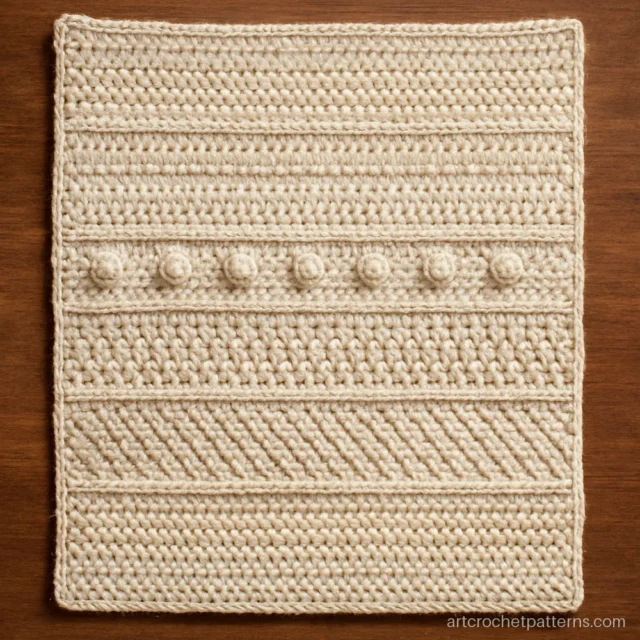 LevelIntermediateYarnWorsted cottonHook5 mm (H-8)
Cream cotton texture sampler
One cream cotton panel with bands of moss stitch, front post ridges, bobbles and sedge. A single pale color shows every shadow.
Maker note: Swatch each band separately first; texture stitches change width, and a sampler needs the same count in every band.
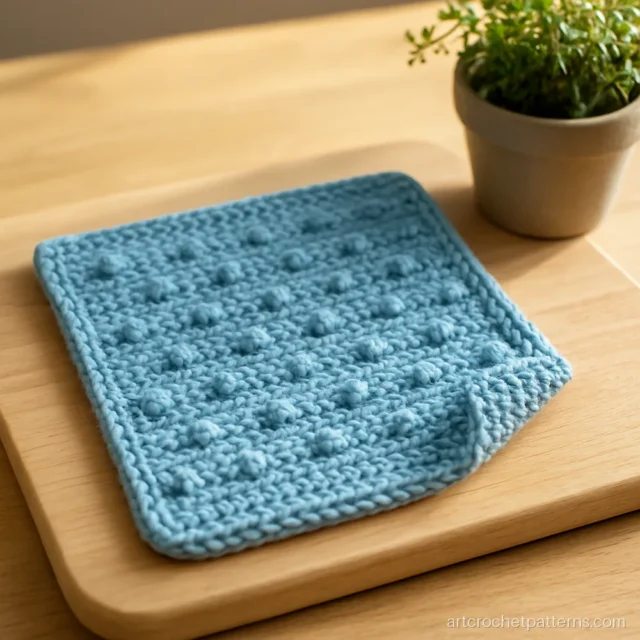 LevelEasyYarnWorsted cottonHook5 mm (H-8)
Sky blue bobble dot cloth
The bobble dot cloth from this page. Offset bobbles every four rows give a polka dot effect that also scrubs.
Maker note: Work bobbles on wrong side rows so they pop toward the front; push each one out with a finger.
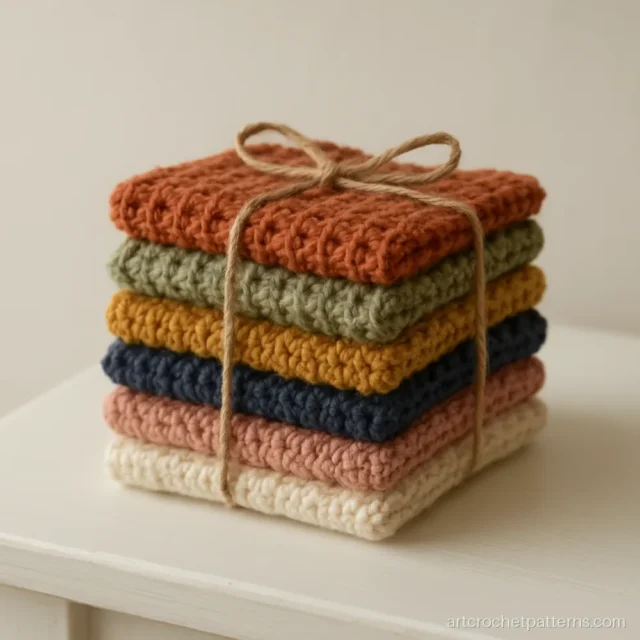 LevelEasyYarnWorsted woolHook5.5 mm (I-9)
Stack of wool texture swatches
Small test squares of waffle, alpine, puff and herringbone stitches. Keeping them together makes choosing a blanket stitch easy.
Maker note: Label each swatch with a paper tag on a string noting hook size and stitch count.
Picking yarn that shows texture
Light reveals texture by casting tiny shadows, so pale and medium solid colors show it best. Dark navy or black hides most of it, and busy variegated yarn fights with it. A smooth, plied yarn keeps each bump crisp; fuzzy mohair, chenille and velvet yarns blur the shapes and are hard to rip back. Cotton makes the sharpest texture and is great for cloths, while wool turns out gentler, bouncier bumps that is easier on the hands for post stitches.
Planning a project with texture
Texture changes everything about your numbers. A puff stitch row can be wider than a sc row with the same count, and post stitches pull the fabric narrower. Always swatch the exact stitch with your yarn and hook before you plan a size. Expect to need more yarn: dense stitches like waffle and alpine can use close to half again as much as a flat dc blanket. For blankets, our blanket stitch guide compares warmth and drape.
Practice pattern: bobble dot cloth
This cloth teaches the bobble in a forgiving sc background. Bobbles are worked on wrong side rows so they push out on the right side. Expect a square close to 6 inches across before edging, when the yarn is worsted cotton and the hook is 5 mm.
- Bobble: (yo, insert hook in st, yo and pull up a loop, yo and draw through 2 loops) 5 times in the same st, yo and draw through all 6 loops on the hook.
- Ch 22.
- Row 1 (RS): Sc in 2nd ch from hook and in each ch across. Turn. (21 sc)
- Row 2 (WS): Ch 1 (does not count), sc in first 2 sts, *bobble in next st, sc in next 3 sts; rep from * 3 more times, bobble in next st, sc in last 2 sts. Turn. (16 sc, 5 bobbles: 21 sts)
- Rows 3 to 5: Ch 1, sc in each st across. Turn. (21)
- Row 6 (WS): Ch 1, sc in first 4 sts, *bobble in next st, sc in next 3 sts; rep from * 2 more times, bobble in next st, sc in last 4 sts. Turn. (17 sc, 4 bobbles: 21 sts)
- Rows 7 to 9: Ch 1, sc in each st across. Turn. (21)
- Rows 10 to 25: Rep Rows 2 to 9 twice.
- Fasten off, or work 1 rnd of sc around all four sides with 3 sc in each corner, then fasten off.
Troubleshooting raised stitches
| Trouble spot | Reason | Try |
|---|---|---|
| Bobbles sink to the back | Worked on a right side row | Keep bobbles to WS rows, or poke each through to the front |
| Edges wave or flare | Texture rows wider than plain rows | Drop a hook size for the texture rows only |
| Fabric pulls narrow | Post stitches drawing the rows in | Add a few stitches or go up half a size |
| Texture looks flat | Dark or fuzzy yarn hiding shadows | Switch to a lighter, smooth yarn |
| Count keeps changing | Bumps hide the stitch tops | Count after each row and use markers |
Caring for textured pieces
Deep textures hold water, so they take longer to dry. Care follows the yarn's ball band; afterward, lay the piece flat on a towel and press the bumps back into shape with your fingers. Skip heavy steam on acrylic post stitch work, which can flatten the ridges for good. For more ideas beyond texture, the crochet stitches hub and the playful fun crochet stitches list are good next stops.
Questions makers ask
What is the easiest textured crochet stitch?
The moss stitch is the easiest. It only uses single crochet and chain 1, yet it gives a woven, pebbly surface that lies flat.
Which texture crochet stitches are best for blankets?
Moss, sedge, suzette and herringbone half double give texture without making a blanket too heavy. Puff and bobble blankets are cozy but use a lot of yarn.
Why does my textured fabric curl or wave?
Texture rows often have a different width from plain rows. Swatch both, then adjust the hook for one of them or add plain rows between textured ones.
Do textured stitches use more yarn?
Almost always. Stitches that pack loops into one spot or wrap posts use noticeably more yarn than flat sc or dc. Get an extra ball or two while the dye lot is still on the shelf.
What color shows crochet texture best?
Pale and medium solid colors. They catch light and shadow, so each bump stands out. Very dark and heavily variegated yarns hide texture.